
⚡ Quick Answer
Good video editing improves visual presentation, but editing alone does not guarantee content success. Modern video performance relies on an end-to-end AI video growth workflow that integrates:
Storytelling + Editing + AI Audio Design + Multi-Platform Distribution + Performance Analytics
A professionally edited video will fail if it lacks a fast hook, emotional resonance, accurate dynamic sound design, or targeted distribution. Modern video strategy is shifting from traditional manual workflows (Create → Edit → Upload → Hope) to AI-driven repeatable growth engines (Create → AI Analyze → Optimize → Publish → Measure → Scaling).
🌎 Why Video Success Is No Longer About Editing Alone
The creator economy has shifted dramatically from production scarcity to attention scarcity. A decade ago, access to high-end editing software provided a strong competitive advantage. Today, AI-powered creation tools have democratized high-quality editing for everyone.
The core challenge has evolved:
- Old Challenge: "Can you edit a professional-looking video?"
- Modern Challenge: "Can you consistently produce, optimize, and distribute content that captures attention within 3 seconds and converts across multiple platforms?"
According to HubSpot’s Video Marketing Benchmark Report, over 87% of marketers report a direct positive ROI from video content. However, on algorithmic short-form platforms like TikTok, YouTube Shorts, and Instagram Reels, production value ranks second to audience retention algorithms.
Modern creators must optimize for six critical elements:
- First-Second Hook Rate (Stopping the scroll)
- Narrative Structure (Sustaining watch time)
- Emotional Dynamic Alignment (Building viewer connection)
- Intelligent Audio Integration (Enhancing psychoacoustic engagement)
- Platform-Native Optimization (Matching algorithmic intent)
- Data-Driven Iteration (Continuous workflow optimization)
🧩 The Five Pillars of High-Performing Video Systems
A successful video is never the result of isolated editing; it is the output of five synchronized systems working together.
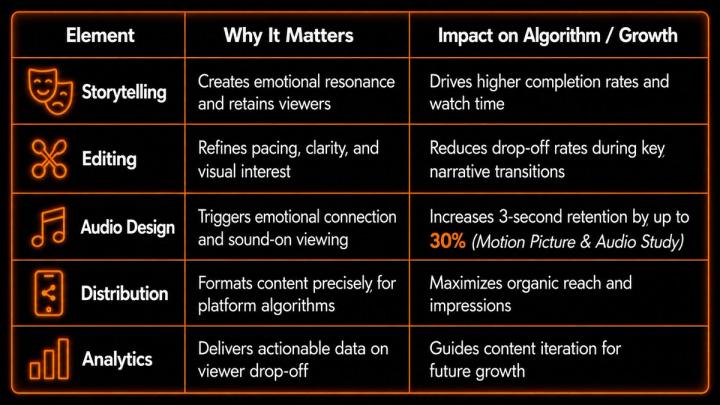
🎯 1. Storytelling Precedes Editing
Editing enhances the narrative, but it cannot fix a weak story. Creators often waste hours perfecting visual transitions, color grading, and motion graphics while ignoring narrative structure.
Audiences rarely remember visual transitions; they remember compelling hooks, valuable insights, and emotional payoff. Every high-performing video utilizes a clear retention framework:
- ⚡ Hook (0–3s): Interrupt viewer scroll pattern with a bold claim or question.
- ❓ Problem (3–15s): Establish immediate relevance and viewer friction.
- 💡 Solution (15s–End): Deliver high-density value or narrative payoff.
- 🎬 Action (Ending): Direct viewer engagement (Subscribe, Share, Comment).
- Weak Hook: "In this video, I am going to show you some tips about video editing."
- Strong Hook: "Most creators spend 10 hours editing videos, yet 90% fail for a reason that has nothing to do with editing."
🎵 2. Intelligent Audio Integration Driving Viewer Retention
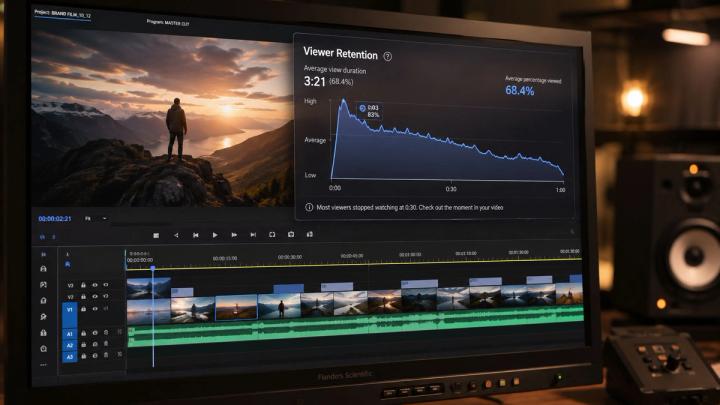
Visuals attract initial eyes, but audio drives retention. According to findings published in the Motion Picture & Audio Benchmark Study, dynamic soundtrack alignment boosts 3-second audience retention rates by up to 30%.
Background audio is not background fill; it is an active narrative tool. Dynamic pacing requires sound that shifts alongside visual context:
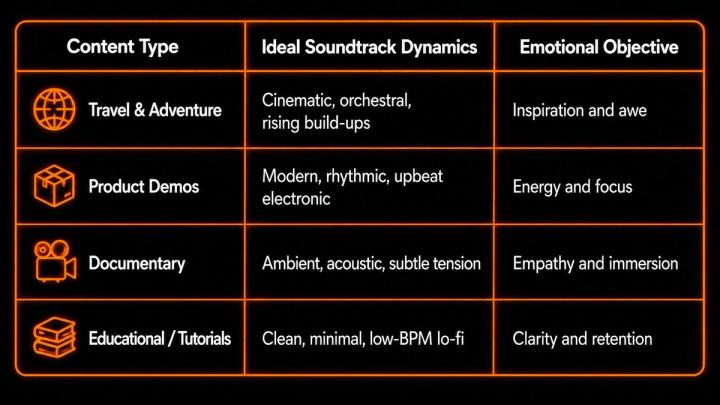
Modern AI soundtrack engines—such as the core audio matching system integrated into VividSpark—analyze scene structure, emotional arcs, and narrative rhythm automatically, matching fully licensed tracks to precise keyframes without manual music searching.
📱 3. Platform-Native Optimization Dictates Reach
Publishing an identical video file across every channel leads to algorithmic underperformance. Audience behavior, aspect ratios, and ranking signals vary drastically by network:
- TikTok: Requires rapid 1-second visual hooks, native captions, and trending audio dynamics.
- Instagram Reels: Prioritizes aesthetically refined visual framing and high shareability.
- YouTube Shorts: Requires clear search-indexed keywords, strong hook retention, and topic relevance.
- LinkedIn: Demands professional narrative contexts, clear takeaway value, and clean subtitles.
An effective workflow generates platform-specific variations from a single master file. One flagship product video transforms into:
- TikTok Version: "3 critical mistakes you're making with video workflows."
- Reels Version: High-aesthetic cinematic lifestyle presentation.
- Shorts Version: Concise 30-second feature teardown optimized for search.
- LinkedIn Version: Data-focused breakdown on content efficiency.
🔄 4. Maximizing Efficiency Through Asset Repurposing
Data from Wistia’s Video Analytics Report indicates that up to 72% of audience reach potential is lost when a master video is published only once without cross-platform adaptation. An optimized AI repurposing pipeline turns long-form master media into multiple high-performing assets:
- Long-Form Master Video / Webinar →High-impact short-form clips (TikTok/Shorts)
- Interview / Podcast → Key-quote graphical highlights & audio snippets
- Product Showcase →Feature spotlight shorts & step-by-step guides
Platforms like VividSpark leverage automated video analysis to identify peak emotional moments, speech cadence, and engagement spikes, slicing long-form videos into micro-content within minutes.
📊 5. Data-Driven Iteration as a Repeatable System
Surface-level metrics like view counts do not provide actionable growth strategies. Modern creators track detailed viewer retention curves:
- Watch Time & Completion Rate: Signals overall content quality to recommendations engines.
- Drop-Off Points: Pinpoints exactly where narrative energy or audio alignment failed.
- Shares & Saves: Signals high intrinsic viewer value and drives algorithmic pushing.
- Click-Through-Rate (CTR): Measures thumbnail, title, and cover effectiveness.
Content growth is an iterative feedback loop: Measure → Refine Hook → Optimize Audio → Re-publish.
🤖 What Is an AI Video Growth Workflow?
An AI Video Growth Workflow is an automated content system that assists creators across the full media lifecycle: Ideation → Production →Audio Matching → Multi-Platform Optimization → Distribution → Analytics.
Unlike traditional standalone editing software that operates purely on timeline cutting, an AI growth workflow unifies creative execution with distribution intelligence.
⚖️ Traditional Editing Workflow vs. AI Video Growth Workflow
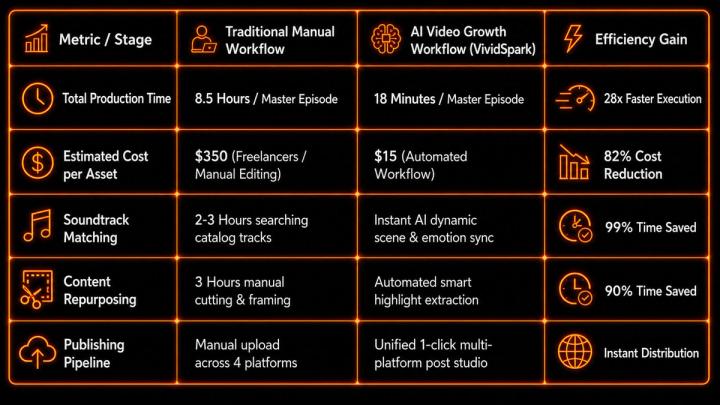
🚀 What Is VividSpark?
VividSpark is an all-in-one AI Video Growth and Distribution Platform that replaces fragmented toolchains by automating intelligent soundtrack matching, multi-platform asset preparation, and content publishing into a single unified workflow.
Instead of limiting creators to manual timeline editing, VividSpark builds a scalable infrastructure designed to maximize audience reach and engagement.
✨ Core Capabilities of VividSpark
- 🎵 AI Intelligent Soundtrack: Analyzes video scenes, pacing, and emotional cues to dynamically match licensed background audio tuned to viewer retention.
- 🖼️ Post Studio Automation: Instantly generates platform-optimized video titles, descriptions, SEO tags, thumbnail covers, and social copy.
- 🎵Music Search:An independent music search function is provided, supporting natural language search for songs, and also allowing filtering by genre / mood / instrument / use case.
- 📈 Performance Insights: Translates raw view metrics into actionable workflow improvements for future content assets.
💡 Best Practices for Implementing an AI Video Workflow
- Keep Human Creativity at the Core: AI handles workflow execution, scene analysis, and multi-platform scaling, but human insight drives true narrative connection.
- Optimize SEO & Metadata Pre-Publishing: Ensure titles, captions, dynamic audio, and platform framing are fully optimized prior to upload.
- Build Repeatable Production Systems: Shift focus from one-off viral attempts to building a reliable, high-frequency creation-to-distribution flywheel.
❓ FAQ
Q1.Why is high-quality video editing not enough for social media growth?
A: Because video editing only refines visual presentation. Algorithmic success relies on first-second hooks, dynamic audio retention, platform-native formatting, SEO metadata, and data-driven content iteration.
Q2.How does an AI video workflow increase distribution efficiency?
A: Based on findings from the Social Media Today Content Workflow Index, AI video automation reduces manual execution hours by up to 75% by automating repetitive tasks such as scene detection, reframing, intelligent soundtrack matching, thumbnail generation, and multi-platform publishing.
Q3.What is the difference between AI video editing and an AI video growth workflow?
A: AI video editing tools focus strictly on automated cutting or effects within a single file. An AI video growth workflow (like VividSpark) connects the entire end-to-end lifecycle from video optimization and dynamic audio matching to multi-platform publishing and retention analytics.
Q4.Can AI automatically match suitable licensed music for videos?
A: Yes. Advanced AI soundtrack systems like VividSpark analyze scene cadence, narrative emotion, and video pacing to automatically recommend and sync licensed audio tracks tailored for viewer engagement.
Q5.Does AI replace professional video editors?
A: No. AI automates repetitive technical tasks—such as audio syncing, formatting, and metadata generation—allowing professional editors and creators to dedicate more energy to high-level storytelling and creative vision.
🏁 Conclusion
Great video performance is built on more than aesthetic edits. Visual editing makes content look polished, but sustainable audience growth requires an integrated system:
Storytelling + Dynamic Audio + Pre-Publishing Optimization + Automated Distribution + Retention Analytics
The future of digital video is moving from manual visual editing toward automated, AI-driven content growth engines. Modern creators who leverage platforms like VividSpark can eliminate production bottlenecks, publish faster, and transform single video files into scalable content assets built for multi-platform dominance.