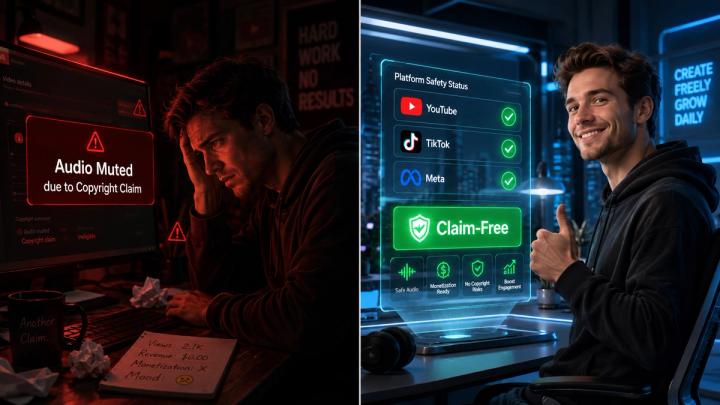
Key Takeaway (TL;DR): Discovering music copyright issues after uploading costs reach, revenue, and production time. A modern pre-publishing workflow utilizes AI audio stem separation and copyright risk detection—such as Vividspark.ai AI Soundtrack—to strip away risky background audio while preserving speech and natural ambience, instantly preparing safe, multi-platform video assets for YouTube, TikTok, and Meta.
⚡ Quick Answer
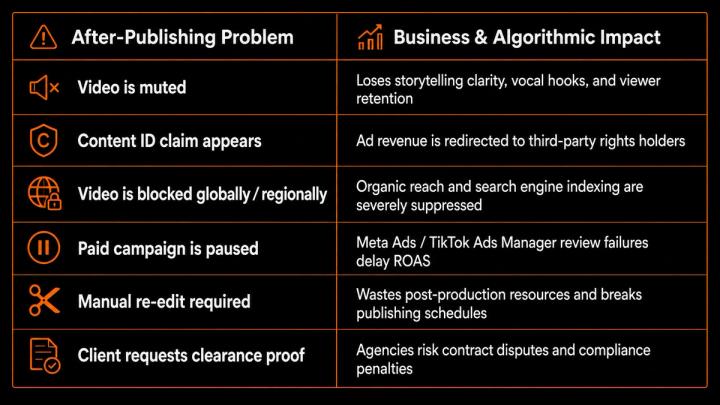
Music copyright checks must happen before video publishing because post-upload copyright flags immediately expose creators and brands to muted audio, demonetization, blocked visibility, delayed paid campaigns, and costly re-edits.
On YouTube, Content ID matches can trigger automatic policies like monetization redirection, geographic blocking, or global takedowns. On TikTok and Meta platforms (Instagram/Facebook), audio flagged by Meta Rights Manager or automated copyright filters results in silenced videos or campaign pauses.
The most efficient solution is a pre-publishing AI workflow: scan audio risk, isolate and remove risky background tracks via vocal preservation technology, replace them with fully cleared licensed music, and publish seamlessly across all social platforms.
🎯 Why Copyright Checks Should Not Wait Until After Upload
Many creators and digital publishers only address audio licensing reactively—after a video is already:
- Exported, scheduled, and published across social channels,
- Sent to a client or internal approval teams, or
- Integrated into active paid media campaign budgets.
Fixing copyright friction at this late stage creates cascading operational costs. Creators are forced to dispute claims, issue manual re-edits, request extended license documentation, or re-upload content, which completely destroys early algorithm momentum.
The fundamental question for modern publishers is not "How do I dispute an audio claim?"
The core question is: "How can I automatically detect, isolate, and swap risky background music before the video ever hits the feed?"
📌 Why Music Copyright Risk Is Common in Social Videos
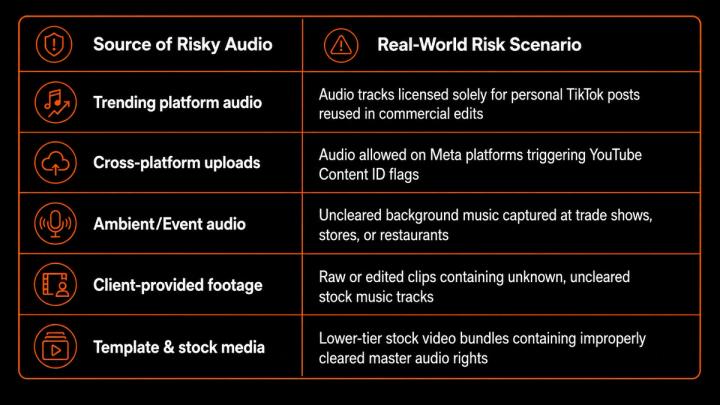
Copyright risk rarely comes from intentional infringement. It usually enters the video pipeline through ambient noise, third-party stock assets, or multi-platform cross-posting.
Legal industry analysis from Reuters Legal emphasizes that commercial video distribution requires clearance for both Composition Rights (publishing) and Sound Recording Rights (master audio). Standard user agreements on major social platforms explicitly do not grant global commercial licenses to businesses, brands, or sponsored creators.
🚨 How Social Platforms Handle Copyrighted Audio
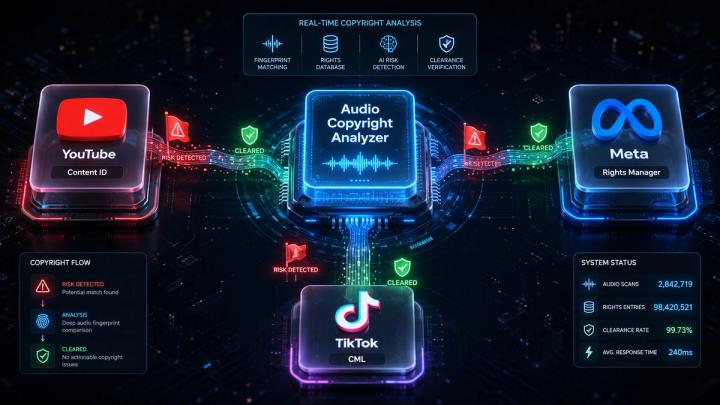
Every major platform enforces copyright through distinct, automated content recognition systems.
- YouTube (Content ID): Scans uploads against a massive database of master audio. Automated outcomes include claim notices, monetization redirection, tracking, or worldwide video blocking.
- TikTok (Commercial Music Library / CML): Automatically mutes videos using non-commercial tracks when posted by Business Accounts or used in ad formats.
- Instagram & Facebook (Meta Rights Manager): Detects matching audio signatures across organic and paid content. Commercial and branded posts missing explicit rights documentation face muted segments or campaign rejection.
- Meta Ads Manager: Paid creative undergoes strict algorithmic licensing checks; uncleared audio can freeze campaign delivery instantly.
This mandates a universal rule for digital publishing: If content is branded, monetized, client-facing, or cross-posted, background audio must be verified pre-upload.
📊 Reactive Workflow vs. Pre-Publishing AI Workflow
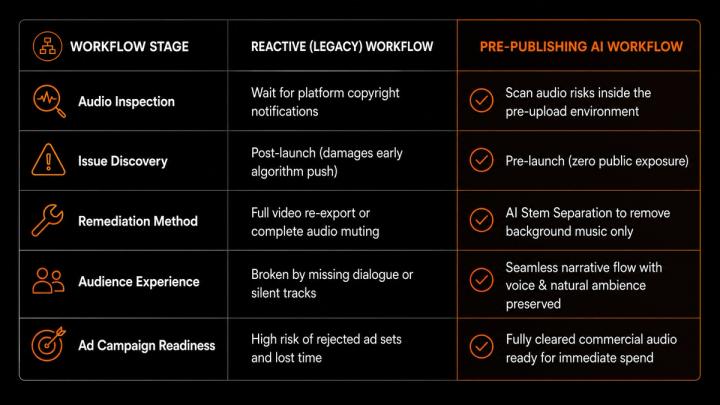
🎧 What an Advanced Pre-Publishing Copyright Check Evaluates
An enterprise-grade copyright scanner provides granular, actionable audio diagnostics rather than a binary "pass/fail" notice:
- Background Music Detection: Pinpoints precise timestamps where background music is detected.
- Music Origin Classification: Identifies whether audio is original, platform-exclusive, public domain, or proprietary stock.
- Commercial Scope Verification: Evaluates whether track rights cover branded content, client deliverables, or paid advertising.
- Speech-to-Music Overlap Analysis: Assesses whether background music overlaps with human speech or critical sound effects.
- AI Audio Separation Feasibility: Determines if background tracks can be cleanly extracted without corrupting voice clarity.
🔇 Why AI Stem Separation Beats Full Video Muting
When a copyright risk is flagged, muting the entire audio track ruins the video's performance. Muting destroys:
- Narrative dialogue and voiceover hooks,
- On-screen tutorial explanations,
- Organic sound effects (ASMR, product interactions), and
- The emotional resonance of the final Call-to-Action (CTA).
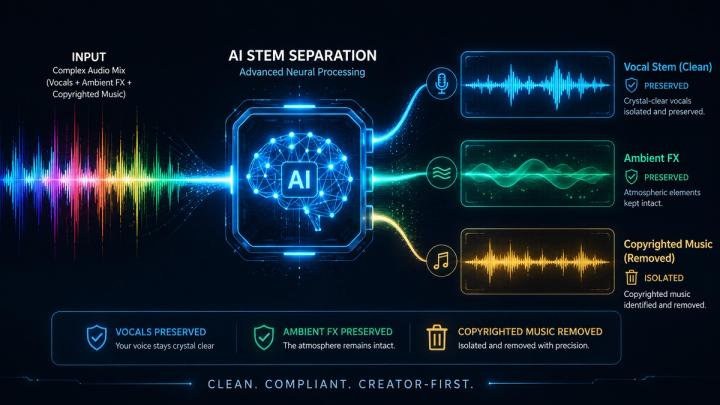
Modern video workflows leverage AI Audio Stem Separation and Vocal Preservation Technology to isolate multi-track audio elements from a single flattened video file.
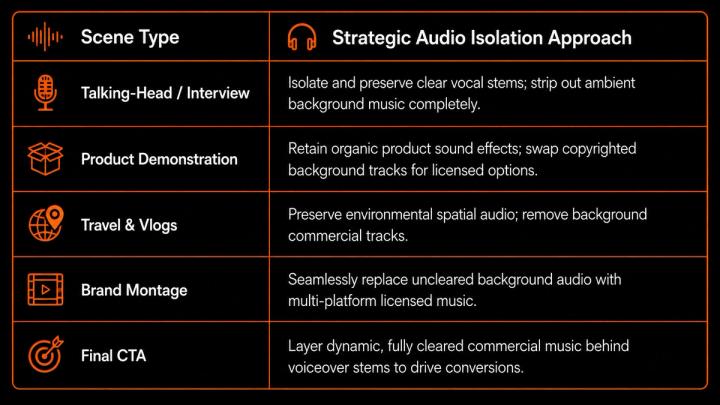
Research in acoustic signal processing and video-music retrieval confirms that advanced deep-learning source separation models can isolate arbitrary background audio while keeping spoken dialogue crisp and unaltered—saving creators hours of tedious multi-track re-editing.
🎵 The Power of Matched Licensed Soundtrack Replacement
Removing risky audio solves the legal issue, but silent videos suffer from low retention. Replacing flagged tracks with dynamic, commercially licensed soundtracks ensures high engagement.
An ideal AI replacement soundtrack must satisfy six criteria:
- Emotional Alignment: Automatically matches the tone (upbeat, cinematic, corporate, tense) of the scene.
- Pacing & BPM Sync: Aligns musical beats with visual cuts and transition points.
- Dynamic Ducking: Stays automatically ducked beneath vocal stems to maintain 100% speech intelligibility.
- Universal Commercial Licensing: Clears worldwide usage across YouTube, Meta, TikTok, and web embeds.
- Multi-Platform Compliance: Eliminates regional licensing restrictions.
- Timeline Control: Allows creators to manually adjust fade-ins, stem volumes, and segment durations.
Market data from Wyzowl indicates that video marketers measure campaign success through engagement, lead generation, and sales conversions. Because music drives emotional retention, pre-cleared, perfectly synchronized music directly impacts ROI.
📱 Multi-Platform Content Syndication Raises the Stakes
Modern creators rarely publish to a single platform. A single video asset typically flows across YouTube Shorts, Instagram Reels, TikTok, Facebook Reels, landing pages, and paid Meta campaigns.
Industry reports from DataReportal highlight that average internet users actively navigate over six social media platforms monthly. This cross-platform reality introduces complex licensing traps:
- Format Shift: A track cleared for an organic Instagram Reel may trigger a Content ID strike when posted as a YouTube Short.
- Commercial Shift: An influencer using trending TikTok audio cannot pass that same video asset to a corporate brand for paid ad campaigns without facing copyright liability.
- Geographic Shift: Audio rights cleared in domestic markets often lack global clearance, causing videos to be muted in specific international territories.
Executing a pre-publishing copyright check eliminates these syndication bottlenecks before distribution begins.
🛠️ The 12-Step Pre-Publishing Audio Checklist
Incorporate this standardized workflow into your video publishing pipeline:
- Upload the finalized video cut into the pre-publishing workspace.
- Execute an automated Copyright Risk Detector scan.
- Analyze detected audio tracks (Original, Platform-Only, Uncleared, or Risky).
- Locate exact timestamp segments containing high-risk background music.
- Apply AI Stem Separation to split dialogue, ambient sound, and background music.
- Extract & Remove the risky background music layer while locking spoken voice stems.
- Browse & Select commercially cleared replacement music matched to scene mood.
- Synchronize replacement audio beats to visual transitions and speech pauses.
- Verify Licensing Scope for commercial, ad-spend, and global syndication rights.
- Generate platform-optimized thumbnails, metadata, and multi-channel publishing copy.
- Distribute sanitized, high-performing video assets across YouTube, TikTok, Instagram, and Facebook.
- Monitor post-launch analytics, audience retention, and claim-free status in real time.
🤖 How Vividspark.ai Optimizes Your Audio Workflow
Vividspark.ai AI Soundtrack integrates advanced copyright management directly into the automated publishing pipeline, empowering creators, agencies, and brands to publish claim-free content faster.
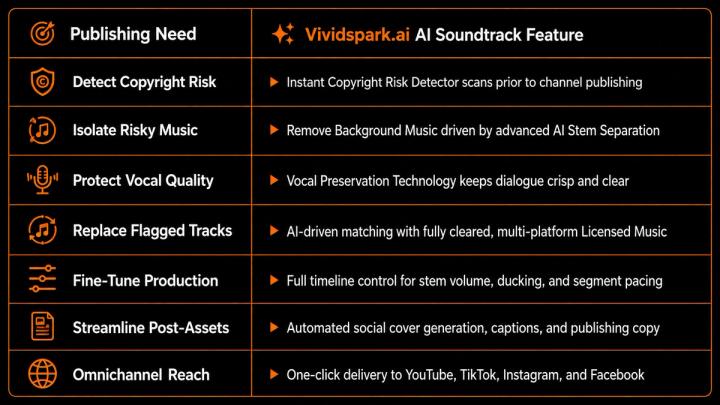
The ultimate pre-publishing workflow is simple: Detect Risk → Isolate Audio Stems → Replace with Cleared Music → Generate Assets → Publish with Confidence.
❓ FAQ
Q1. Why should music copyright checks occur before video publishing?
A: Checking copyright prior to publishing prevents automatic platform mutes, demonetization, Content ID strikes, ad campaign rejections, and algorithmic reach penalties. It allows creators to isolate and fix audio issues in a private staging environment.
Q2. What happens when YouTube Content ID flags copyrighted music?
A: YouTube Content ID gives rights holders immediate control over flagged videos. Policies applied by copyright owners include redirecting ad revenue, tracking video analytics, or enforcing worldwide/regional view blocks.
Q3. Can TikTok mute my commercial video after it goes live?
A: Yes. TikTok actively mutes organic or sponsored videos using non-commercial audio signatures, particularly on Business Accounts. TikTok explicitly directs commercial entities to utilize its Commercial Music Library (CML) or present verified third-party synchronization licenses.
Q4. Does AI Audio Stem Separation damage spoken dialogue quality?
A: Modern deep-learning vocal preservation technology cleanly separates background music frequencies from speech formants, keeping voiceovers crisp, natural, and intact while stripping out copyrighted music.
Q5. How does Vividspark.ai secure multi-platform video publishing?
A: Vividspark.ai AI Soundtrack combines automated risk detection, background audio removal, vocal isolation, and dynamic licensed track replacement in a single pre-publishing workspace, ensuring total compliance across YouTube, TikTok, Instagram, and Facebook.
✨ Conclusion
In 2026, efficient video publishing requires proactive risk management. Relying on post-upload disputes or muting entire videos cripples retention, wastes production budgets, and hurts channel growth.
By implementing an end-to-end pre-publishing workflow—detecting copyright risks early, stripping away flagged tracks with AI Audio Stem Separation, preserving natural speech, and layering fully cleared commercially licensed music—creators and brands can scale their multi-platform video distribution completely claim-free.
Experience seamless, compliant, high-impact video publishing today with Vividspark.ai AI Soundtrack.