⚡ Quick Answer
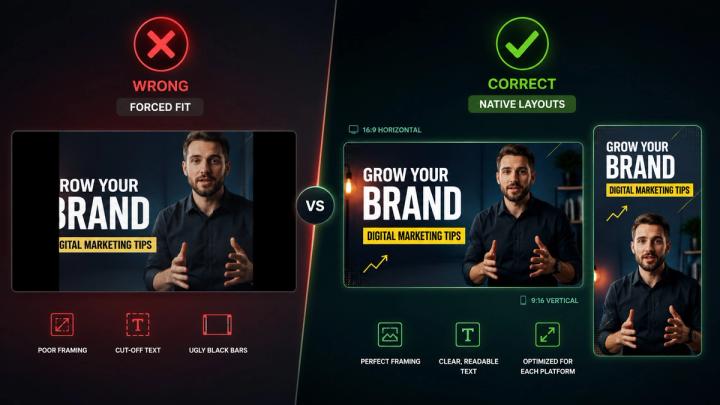
Every video needs both vertical and horizontal covers because modern platform algorithms and user interfaces display content in completely different dimensions.
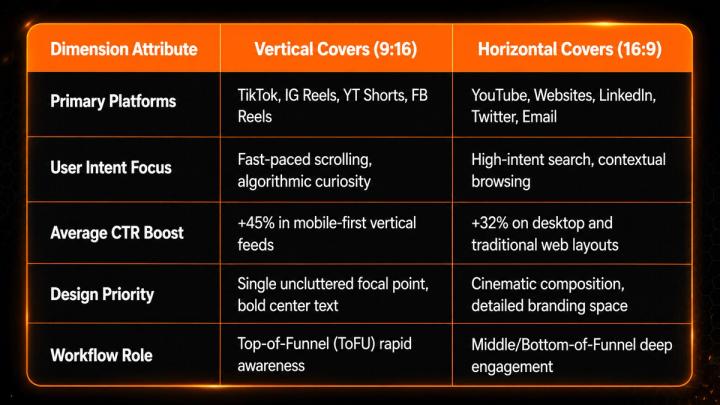
According to 2026 digital marketing benchmarks, implementing a Dual-Cover Strategy (publishing both 9:16 vertical and 16:9 horizontal visuals) can increase an omnichannel campaign's average Click-Through Rate (CTR) by 32% to 45% compared to relying on a single, auto-generated screenshot.
- Vertical covers (9:16 aspect ratio) dominate mobile-first, algorithm-driven feeds like TikTok, Instagram Reels, YouTube Shorts, and Facebook Reels.
- Horizontal covers (16:9 aspect ratio) anchor long-form video discovery on standard YouTube, website embeds, blog articles, email newsletters, and cross-platform native video posts.
A unified workflow like vividspark.ai eliminates the visual friction of content fragmentation. By automatically identifying high-density semantic frames, it generates platform-ready vertical and horizontal covers alongside structured metadata in a single, high-efficiency media pipeline.
🎯 The Core of Omnichannel Video Distribution
A video cover is no longer just a decorative asset—it is a critical micro-conversion tool. In high-velocity social feeds, a thumbnail has less than 1.5 seconds to capture user attention and prevent a bounce.
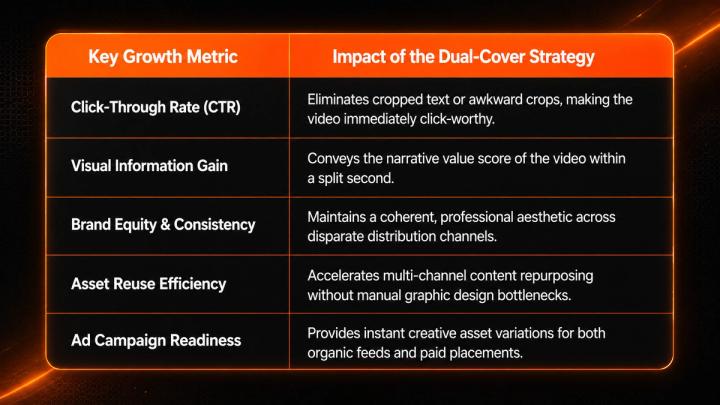
When you package your video assets correctly for each platform's interface layout, you optimize for several core growth metrics:
📱 Vertical Covers: Dominating Mobile-First Discovery
Short-form video consumption is entirely mobile-centric. Algorithms on TikTok, Reels, and Shorts favor native-feeling vertical presentation. When a user lands on a creator profile or a brand grid, the vertical cover acts as the primary gateway to their content archive.
Strategic Use Cases for 9:16 Assets
- TikTok Search & Feed Previews: Maximizes screen real estate in portrait mode.
- Instagram Reels Profile Grid: Preserves visual storytelling cohesion on brand pages.
- YouTube Shorts Shelves: Stands out in the highly competitive mobile short-form feeds.
- Facebook Reels Interstitials: Fits seamlessly into social navigation spaces.
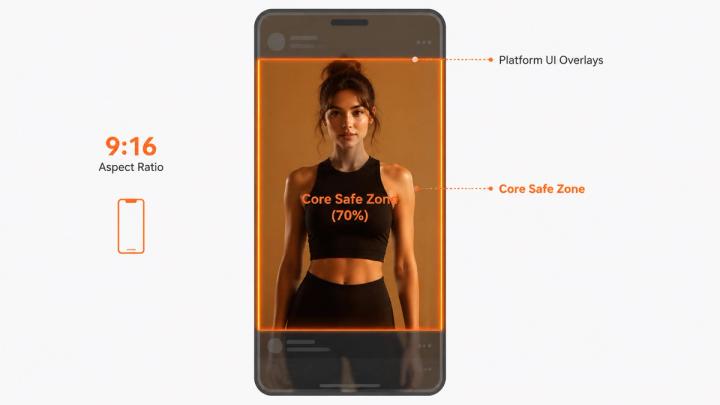
The 9:16 Design Rule: Keep the core visual focus and typographic elements within the central 70% safe zone to prevent platform UI overlays (like usernames, descriptions, or action buttons) from blocking your message.
🖥️ Horizontal Covers: Maximizing Long-Form & Web Distribution
While short-form video dominates mobile attention, horizontal layouts remain the standard for high-intent content consumption, search engines, and web environments.
Strategic Use Cases for 16:9 Assets
- YouTube Long-Form Thumbnails: The undisputed standard for desktop and Connected TV (CTV) discovery.
- Omnichannel Native Posts: Outperforms on LinkedIn, X (Twitter), and traditional Facebook feeds.
- Web Embedding & Content Hubs: Fits standard video blocks on landing pages, blog posts, and digital press kits.
- Email Marketing Previews: Renders perfectly inside rectangular email newsletter templates.
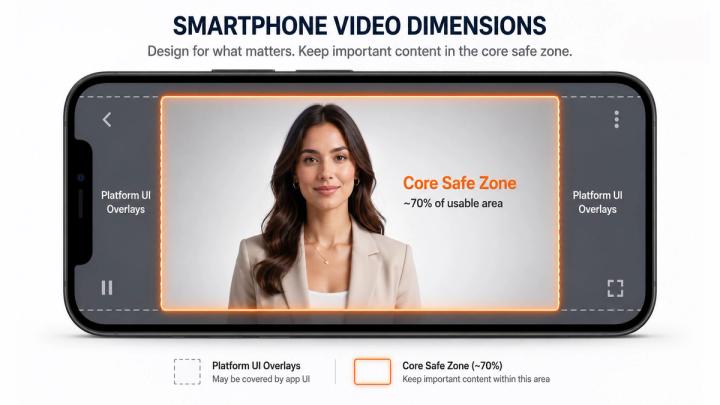
A horizontal canvas offers more space for cinematic framing, detailed typographic layouts, and complex visual hierarchy—making it the ideal choice for in-depth educational or promotional campaigns.
📊 Deep Dive: Vertical vs. Horizontal Visual Assets
❌ The High Cost of the "One-Size-Fits-All" Approach
Relying on a single manual screenshot or allowing platforms to auto-crop your assets compromises content performance in several ways:
- The Black-Bar Penalty: Placing a 9:16 video into a 16:9 slot results in empty space that screams "low effort."
- Shattered Text Layouts: Text optimized for widescreen becomes cut off or illegible when squeezed into a vertical layout.
- The "Awkward Frame" Trap: Random platform auto-captures frequently catch mid-blink expressions or blurry motion artifacts.
- Interface Overlap: Crucial titles get hidden behind the TikTok heart button or the YouTube duration sticker.
⚙️ Building an Automated Content Repurposing Pipeline
Manually creating separate cover variations is an operational bottleneck. It turns an agile publishing workflow into hours of repetitive asset slicing:
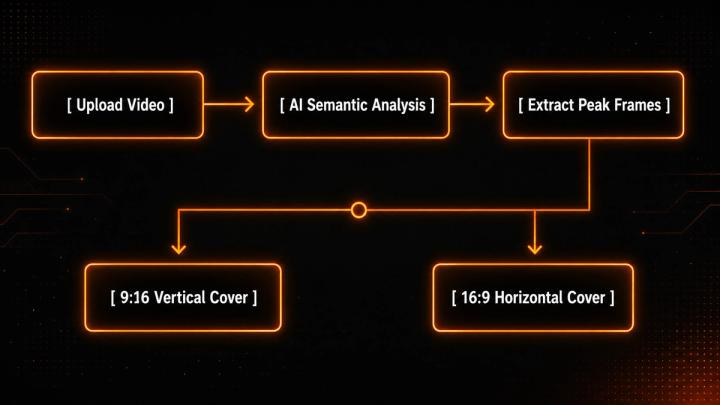
A streamlined asset engine solves this issue entirely:
- Intelligent Frame Extraction: Computer vision models analyze the video file to instantly isolate crisp, high-contrast frames.
- Dynamic Multi-Ratio Cropping: The system isolates the primary subject to keep it centered in both 9:16 and 16:9 formats.
- Automated Copywriting: Generates platform-specific SEO descriptions, tags, and titles simultaneously.
With vividspark.ai, creators transition from manual editing to a unified media pipeline. One video file instantly yields an entire platform-ready promotional toolkit.
📈 Analyzing Asset Performance After Distribution
To maximize your ROI, track how your custom covers impact your overall analytics pipeline:
- CTR (Click-Through Rate): The direct metric of your cover's ability to win the initial click.
- Audience Retention Hook Rate: Compares views to 3-second watches to verify that your cover set accurate expectations.
- Omnichannel Engagement: Tracks how effectively your tailored formats drove actions across distinct platform demographics.
🚀 Scaled Operations for Digital Agencies and Brands
For solo creators, automated cover generation saves hours of work. For digital agencies and content syndication teams, it changes how operations scale.
Managing dozens of client accounts across disparate publishing calendars makes manual resizing a major margin killer. Deploying a centralized cover system ensures consistent brand presentation across channels, speeds up turnaround times, and frees up your creative team to focus on high-level production.
🛠️ The 9-Step Dual-Cover Workflow
- Ingest: Upload the master video asset to your hub.
- Scan: Use automated detection to find the highest-quality keyframes.
- Compile Vertical: Generate the 9:16 mobile asset, protecting the central safe margins.
- Compile Horizontal: Generate the 16:9 layout to optimize for wide-angle viewports.
- Audit Composition: Verify subject clarity and ensure text does not collide with platform UI elements.
- Contextualize: Match each cover format with platform-specific captions and target hashtags.
- Syndicate: Schedule and publish across your platform ecosystem.
- Evaluate: Measure CTR and watch time variations across platforms.
- Iterate: Refine your visual style based on real-world performance data.
By relying on an intelligent workflow like vividspark.ai, this process becomes entirely automated—connecting asset ingestion, creative generation, cross-platform distribution, and performance tracking into a single dashboard.
❓ FAQ
1. Why does every video need both vertical and horizontal covers?
Because modern internet users browse content across different screen orientations. Vertical covers capture attention in fast-scrolling mobile feeds, while horizontal covers maintain professionalism across desktop layouts, search results, and traditional websites.
2. Can I use a square (1:1) crop instead?
Square crops are highly flexible for mid-feed browsing grids (like Instagram's profile page). However, they do not maximize screen real estate in full-screen vertical feeds (9:16) or widescreen layouts (16:9). A true Dual-Cover Strategy performs significantly better.
3. Are vertical covers strictly for short-form content?
No. Even if you are promoting a long-form 16:9 video, generating a 9:16 vertical cover is incredibly useful for mobile ad placements, Instagram Stories, and interactive promotions designed to drive traffic back to your master link.
4. How does vividspark.ai automate the Dual-Cover Strategy?
vividspark.ai processes your uploaded master video, automatically detects the highest-quality semantic frames, crops them natively for both vertical and horizontal viewports, creates matching metadata, and simplifies multi-platform distribution within a centralized operational workflow.
✨ Conclusion
In 2026, content distribution is no longer tied to a single screen format or platform layout. Winning the battle for organic reach requires a smart asset system.
Adopting the Dual-Cover Strategy ensures that your video fits naturally wherever it lands—whether that is a fast-paced mobile feed on TikTok or an informative article embed on a website. Tailoring your presentation increases clarity, drives higher click-through rates, and protects your brand equity across channels.
With automated workflows like vividspark.ai, packaging your videos for the entire web is no longer a time-consuming chore. It becomes a core competitive advantage that scales your visibility, saves operational time, and improves cross-platform video performance.