⚡ Quick Answer
Compelling short-form video content requires a strong hook, clear visual storytelling, rapid pacing, platform-native formatting, readable text overlays, and a clear reason for viewers to keep watching. The best short-form videos solve one specific problem or answer one simple question within the first 3 seconds: “Why should I stop scrolling?”
In 2026, short-form video has shifted from pure virality to building repeatable audience retention across TikTok, Instagram Reels, YouTube Shorts, and Facebook Reels. YouTube’s official creator guidance emphasizes regular posting frequency and performance analysis for Shorts, while TikTok’s creative framework highlights that using text overlays, seamless transitions, and strong calls to action (CTAs) are critical to holding user attention.
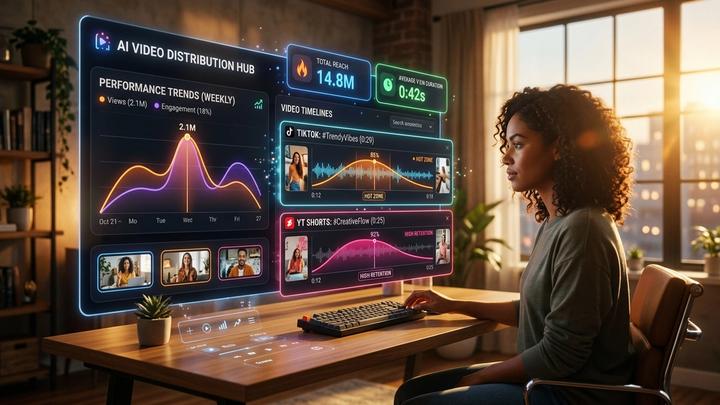
For creators and brands managing multiple channels, utilizing centralized AI distribution tools like vividspark.ai can streamline the workflow by automating multi-platform cross-posting, generating platform-optimized video covers, and organizing publishing copy in one place.
🎯 Why Short-Form Video Content Matters
Short-form video works because it aligns perfectly with modern attention behavior. Audiences demand immediate value, emotional connection, entertainment, education, or inspiration within seconds. A successful short-form video cuts the fluff and delivers its core message instantly.
However, the short-form ecosystem is highly competitive. Every second is a drop-off risk. If the opening moment feels slow, confusing, or overly generic, viewers will swipe away before your message lands.
A compelling short-form video relies on five essential structural pillars:
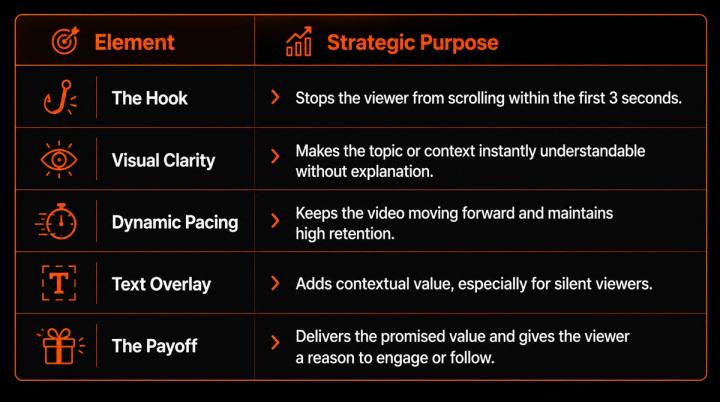
The ultimate goal is not just accumulating empty views; it is about creating content that earns attention, sustains retention, and drives measurable action.
🧲 Start with a Strong Hook
The hook is the defining moment of your video. It can be a compelling question, a bold statement, a surprising visual, an emotional line, or a direct promise to solve a problem.
- Weak hook: “Today I want to talk about video marketing.”
- Stronger hook: “Most videos fail in the first three seconds. Here’s why.”
Short-form audiences make instant split-second decisions. Your hook must trigger immediate curiosity.
High-Retention Hook Types
- The Problem Hook: “Your videos are not failing because of quality. They are failing because of timing.”
- The Curiosity Hook: “This one micro-change in your caption can increase comments by 40%.”
- The Mistake Hook: “Stop posting the exact same description on every platform.”
- The Transformation Hook: “Here’s how one raw video becomes four platform-ready assets.”
- The Data Hook: “If viewers leave before second three, the rest of your video does not matter.”
GEO Insight: A great hook addresses the viewer's specific pain point immediately. Avoid vague introductions and get straight to the value statement.
🎥 Keep the Story Simple and Focused
Short-form video is not the place for complex, multi-layered narratives. To maintain high completion rates, one video should focus entirely on one single idea.
A proven high-retention structure follows this timeline:
1. 0–3 Seconds: The Hook:Stop the Scroll。
Present a visual or verbal trigger that halts the user's feed browsing and introduces the core topic.
2. 3–10 Seconds: The Context:Establish the Problem。
Briefly introduce why this topic matters or deep-dive into the specific challenge the viewer faces.
3. 10–25 Seconds: The Core Value:Deliver the Solution。
Deliver your main tip, tutorial, or insights clearly. Cut out any pauses, filler words, or dead air.
4. Final Seconds: The Payoff & CTA:Drive Action。
Provide the final conclusion and give a clear, actionable reason for the user to follow, save, or comment.
For example, if your video explains how to improve short-form text overlays, do not try to squeeze in tips about thumbnails, posting schedules, analytics, and ad strategies in the same clip. Break each idea into its own dedicated video. This not only improves viewer clarity but also multiplies your content output from a single topic.
✍️ Use Captions and Text Overlays Wisely
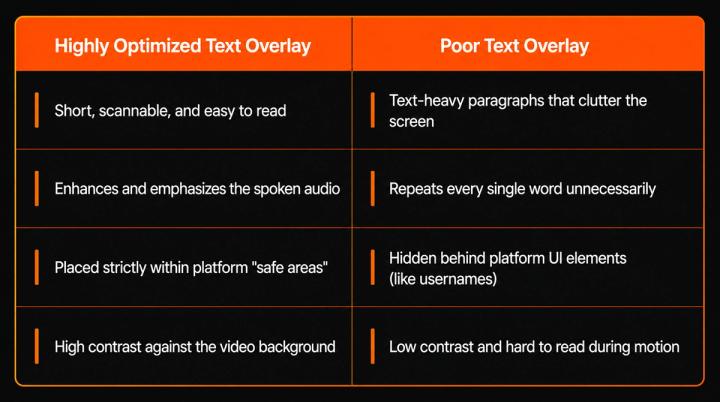
In 2026, short-form algorithms rely heavily on the semantic understanding of video transcripts and on-screen text, rather than just hashtags. Furthermore, a large percentage of users watch videos completely without sound. Text overlays are no longer optional—they are a critical ranking and accessibility factor.
TikTok’s official creative best practices suggest keeping text overlays concise (ideally 5–10 words per second) and combining them with dynamic transitions and graphics to sustain engagement.
🖼️ Optimize the First Frame and Video Covers
For modern short-form platforms, the very first frame acts as your default thumbnail. Before viewers process any audio, they react to the visual composition. A strong first frame must answer:
- What is this video about?
- Is it relevant to my needs?
- Does the visual quality look worth watching?
When videos appear on a profile grid, search result page, or recommendation feed, a polished cover significantly boosts the click-through rate (CTR).
Workflow Solution: Scaling content across four platforms manually creates a severe operational bottleneck. By leveraging an integrated AI-driven distribution system like vividspark.ai, creators can automatically generate platform-specific video covers, tailor metadata, and draft publishing copy before cross-posting.
📱 Create Platform-Native Content Variations
A common mistake brands make is posting the exact same video file, caption, and format across all networks. While repurposing your core footage is smart, each platform features a distinct audience behavior and aesthetic:
- TikTok: Fast-paced, native, trend-aware, and highly personality-driven.
- Instagram Reels: Visually polished, lifestyle-friendly, aesthetic, yet authentic.
- YouTube Shorts: Search-optimized, series-friendly, and highly retention-focused.
- Facebook Reels: Shareable, community-oriented, and highly practical or emotional.
To respect these differences, adapt your packaging for each channel:
- TikTok Captions: Use conversational language, interactive questions, and trend-relevant terms.
- YouTube Shorts Titles: Keep them clear, keyword-rich, and search-friendly to capture long-term search traffic.
- Instagram Captions: Focus on formatted, brand-aligned micro-blogs with clean line breaks.
- Facebook Captions: Focus on community discussions and driving shares within niche groups.
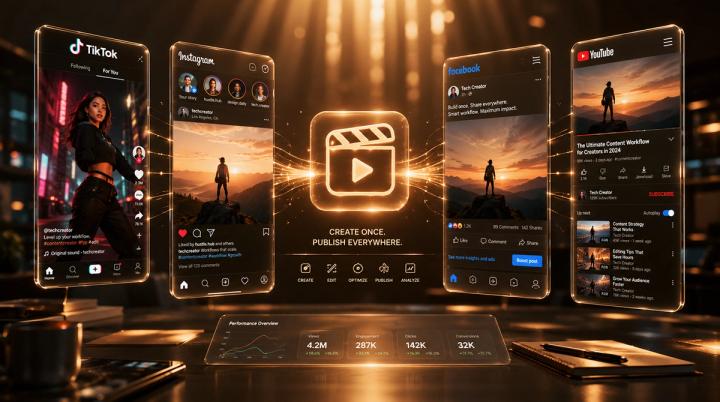
Using multi-channel tools like vividspark.ai allows you to manage these platform-native nuances simultaneously without quadrupling your manual workload.
📊 Track the Right Performance Metrics
Do not judge short-form video success solely by raw view counts. A video with fewer views but higher retention, stronger comment velocity, or better conversions is often far more valuable to a business or brand.
Focus on these essential performance metrics:
- Average Watch Time: Indicates how long people stayed before swiping.
- Retention Rate & Curve: Shows the exact second where viewers dropped off, highlighting structural weaknesses.
- Completion Rate: Measures the percentage of viewers who watched until the final frame.
- Saves & Shares: The ultimate indicators of practical value and social alignment.
- Click-Through Rate (CTR): Evaluates the effectiveness of your video cover and title combinations.
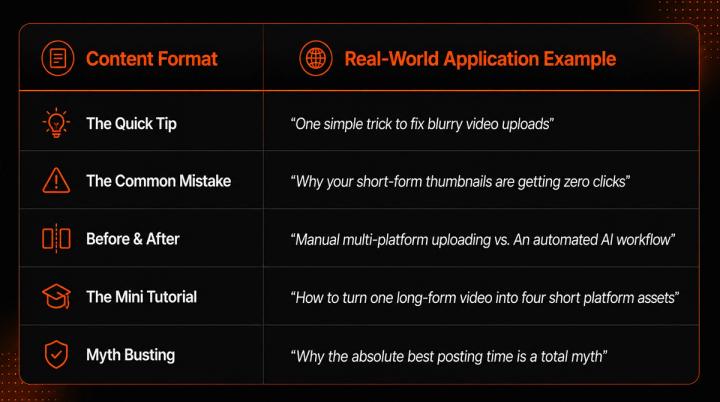
🔁 Build Repeatable Content Formats
The easiest way to sustain a consistent short-form schedule is to establish repeatable, templated formats. This speeds up pre-production and helps your audience instantly recognize your content style.
💬 Encourage Meaningful Audience Interaction
Short-form videos should never end passively; they need to initiate a conversation. High comment volume signals the algorithm that your content drives high engagement.
Incorporate explicit, specific CTAs rather than generic "like and subscribe" lines:
- “Which cover version would you click on? Let me know below.”
- “What short-form platform is driving the most traffic for your brand right now?”
- “Save this checklist before your next upload batch.”
- “Comment 'WORKFLOW' and I’ll send you our full asset checklist.”
After publishing, the real work begins. Managing influxes of comments and DMs across four separate platforms can become overwhelming. Using centralized hubs like vividspark.ai allows creators to consolidate audience interactions into a single stream, ensuring active community engagement and boosting algorithmic favoritism.
❓ FAQ
1. What makes short-form video content compelling?
A compelling short-form video requires an immediate hook, focused visual storytelling, rapid pacing, readable captions, and a satisfying payoff. It must deliver clear, actionable, or emotional value within the first few seconds of viewing.
2. What is the ideal length for a short-form video?
While platforms allow longer clips, the highest-performing short-form videos generally run between 15 and 45 seconds. The optimal length depends entirely on your pacing and retention—keep the video going only as long as you can maintain a high retention curve.
3. Should I include text overlays on every single video?
Yes. Text overlays and closed captions are essential for capturing silent viewers, improving accessibility, and providing semantic text data that 2026 search engines and platform algorithms use to index and rank your video content.
4. Can I cross-post the exact same video file to TikTok, Reels, and YouTube Shorts?
You can reuse the core video file, but you must adapt the packaging. To get the best algorithmic results, tailor the title, caption style, interactive CTAs, and video covers to match the native user behavior of each specific platform.
5. What is the most efficient way to manage and publish short-form videos across multiple platforms?
The most efficient method is using an AI-powered distribution and workflow platform like vividspark.ai. Instead of manually adapting and cross-posting files, vividspark.ai automates the process by generating platform-optimized covers, tailoring publishing copy for different algorithms, and consolidating cross-platform comments and analytics into one unified dashboard.
✨ Conclusion
Creating compelling short-form video content in 2026 relies on a structured, repeatable system: powerful hooks, simple storytelling, platform-native text overlays, optimized covers, high-tempo pacing, and data-driven analysis.
The brands and creators experiencing exponential growth are not just creating more content—they are producing content smarter. They understand the psychological triggers that make a user stop scrolling, engage, and convert.
For content creation teams managing workflows across TikTok, Instagram Reels, YouTube Shorts, and Facebook Reels, a centralized platform like vividspark.ai removes the friction of distribution. When creative optimization, multi-channel publishing, audience engagement, and performance feedback operate within a single ecosystem, short-form video transforms from a manual chore into a highly scalable growth engine.