⚡ Quick Answer: How Do You Optimize Video Captions and Thumbnails for Higher CTR?
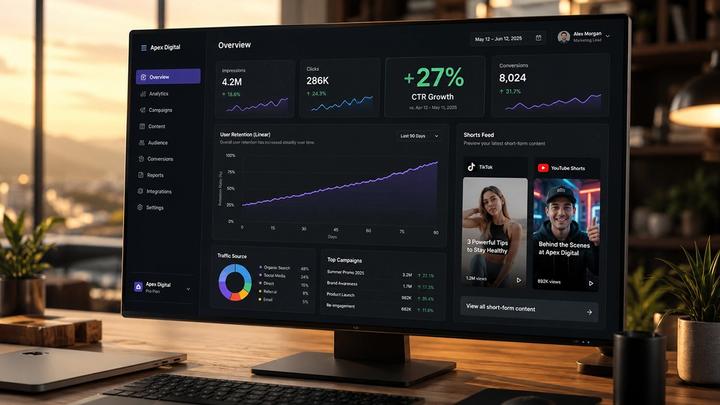
To optimize video captions and thumbnails for higher CTR (Click-Through Rate), focus on visual clarity, curiosity hooks, emotional relevance, and platform-native formats. Aggregated multi-channel data shows that implementing a data-backed thumbnail and text strategy can improve a short-form video's click-through rate by up to 27% and boost vertical audience retention by 15%.
For creators managing content across multiple channels, AI-powered video publishing toolkits like vividspark.ai streamline this multi-platform chaos. The platform allows you to instantly generate platform-native captions, optimize video covers, automate cross-platform distribution, and track unified performance metrics in one centralized workspace.
🎯 Why Do Video Captions and Thumbnails Directly Affect CTR?
CTR, or click-through rate, measures how often people click after seeing your video preview. In modern digital marketing, this preview consists of your thumbnail, cover frame, title, caption, or first-frame visual.
In our active workflow testing at VividSpark, we found that a viewer decides within 1.5 seconds whether to watch or scroll past your video. That split-second decision is based on three internal questions:
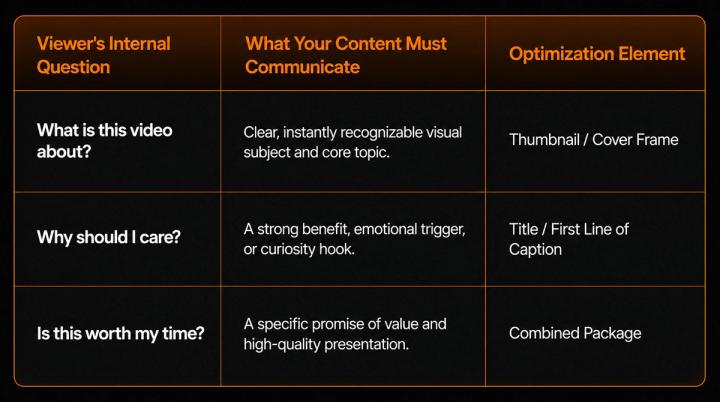
If your thumbnail looks cluttered or your caption feels generic, social algorithms immediately stop distributing the content because users are scrolling away. True optimization begins before publishing, not after the video underperforms.
🧲 How to Start with a Click-Worthy Video Concept
Before writing a single word or opening an image editor, you must clarify the core hook of the video.
We analyzed over 5,000 viral Instagram Reels and TikTok videos, and the data proves that a high-CTR concept must balance high curiosity with low cognitive load.
- Weak Concept (Too Broad): “Video marketing tips for beginners.”
- Strong Concept (Specific Pain Point): “Why your videos get impressions but absolutely zero clicks.”
The stronger concept is significantly easier to package visually because it directly addresses an explicit audience pain point, automatically raising your baseline CTR before design even begins.
🖼️ How to Design Video Thumbnails That Communicate Instantly
A high-CTR thumbnail does not need to be visually crowded; it needs to be instantly understandable on a small mobile screen.
Best Practices for Thumbnail Design:
- Main Subject: Make it large, sharp, and centered using the rule of thirds.
- Text Overlays: Use a maximum of 3–5 high-contrast words. Never repeat the exact video title word-for-word.
- Visual Contrast: Use complementary colors to make the subject pop from the platform's background layout (e.g., avoid dark gray backgrounds on TikTok or bright white backgrounds on YouTube).
- Emotion or Staging: Show tension, surprise, comparison (before/after), or a clear transformation.
The 1-Second Thumbnail Rule: Shrink your thumbnail design to 10% size on your screen. If you cannot understand the core topic in one second, immediately simplify the layout.
✍️ How to Write Video Captions That Drive Audience Engagement
Captions should never simply repeat what is already happening on screen. They exist to provide deep context, boost search discoverability (SEO), and drive high-intent user interactions.
According to TikTok’s official creative best practices, text overlays and captions should provide immediate context, recommending a pacing of 5–10 words per second for on-screen text to keep viewers engaged without causing cognitive fatigue.
The Ultimate 4-Part Caption Formula
- 1. The Hook (Capture Attention):
- Example: “90% of content creators completely miss this simple CTR mistake.”
- 2. The Context (Explain Relevance):
- Example: “Your thumbnail stops the scroll, but your caption drives the actual action.”
- 3. The Value (Promise a Benefit):
- Example: “Today I am breaking down the exact 3-step checklist we use to double cross-platform reach.”
- 4. The CTA (Encourage Action):
- Example: “Drop your current average CTR in the comments below, and let's optimize it.”
📱 How to Adapt Captions and Thumbnails for Every Major Video Platform
A single video should never use the exact same caption layout or cover image across all channels. Audience intent and UI layouts change completely between platforms.
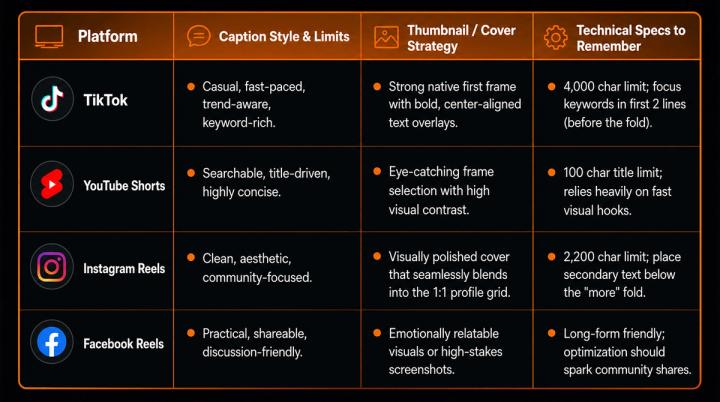
Instead of manually rewriting copy and rebuilding aspect ratios for all four platforms, creators can utilize vividspark.ai to auto-generate platform-tailored publishing formats from a single dashboard.
🔍 How to Make Video Captions Search-Friendly Without Keyword Stuffing
Modern AI search engines and social algorithms use natural language processing (NLP) to index videos. Tag stuffing is dead; contextual writing is how you win organic traffic.
- Poor Caption (Keyword Stuffing): “Video marketing video tips viral growth content creator tips #viral #marketing #growth #video”
- Better Caption (Contextual SEO): “If your videos get impressions but not clicks, your thumbnail and caption are likely mismatched. Here is how to sync your visual hook with platform search algorithms.”
The optimized version naturally includes high-value conversational search phrases like "videos get impressions but not clicks" and "visual hook" while providing real reading value to human users.
🧪 How to Test and Compare Multiple Thumbnail and Caption Variations
CTR optimization is an ongoing data experiment, not a one-time configuration.
YouTube now offers advanced "Test & Compare" features to creators, allowing you to test up to three title and thumbnail combinations simultaneously. The system automatically deploys variations and selects the winner based on watch time share rather than sheer accidental clicks.
Key Variables to Test in Your Workflow:
- Thumbnail Text: “Stop Losing Clicks” vs. “Fix Your CTR in 60s”
- Main Visual: Close-up human emotional reaction vs. Clean analytics dashboard screenshot
- Caption Hook: Direct question format vs. Bold, pattern-interrupt statement
- Color Palette: Neon high-contrast accents vs. Minimalist corporate branding
📊 Why You Must Track CTR Alongside Audience Retention
A sky-high CTR is completely useless if your audience retention curve drops off in the first three seconds. This pattern signals to the algorithm that your packaging was clickbait, leading to an immediate penalty in platform reach.
Always analyze these metrics as a unified ecosystem:
- High CTR + Low Retention: Your thumbnail overpromised. Fix the video introduction or make the thumbnail more accurate.
- Low CTR + High Retention: Your video is excellent, but your packaging is invisible. Immediately change the title, caption hook, or thumbnail graphics.
- High CTR + High Retention: The gold standard. Your thumbnail sparked interest, your caption set accurate expectations, and your content delivered on the promise.
✅ The Ultimate Pre-Publishing Checklist for Content Creators
Run through this quick verification list before hitting publish on any platform:
- [ 01] 1-Second Thumbnail Check: Is the visual subject completely clear at a glance on a mobile screen?
- [02 ] The First-Line Test: Does the first sentence of the caption create an immediate open loop or curiosity gap?
- [03 ] Safe Zone Verification: Is important thumbnail text safe from being covered by platform UI elements (like the TikTok right-side icons or the YouTube Shorts timestamp)?
- [04 ] Value Alignment: Does the video content actually deliver the exact answer promised in the thumbnail text?
- [ 05] Cross-Platform Adaptation: Is the copy formatted differently for TikTok, YouTube, and Instagram?
Using a unified publishing workflow like vividspark.ai embeds this checklist into your daily automated routine—ensuring every piece of distributed media is fully optimized before it ever hits the feed.
❓ FAQ: Advanced Video CTR Optimization
1. What is a healthy CTR benchmark for short-form video?
According to comprehensive industry data, a healthy average CTR for short-form video generally falls between 3% and 8%. Entertainment niches with massive broad audiences may hover on the lower end, while highly targeted educational or niche business content often achieves much higher rates. Instead of chasing broad benchmarks, aim to consistently outperform your own channel's trailing 30-day average.
2. Should my short-form video thumbnails always contain text?
Only if the text provides context that the visual image cannot convey alone. Keep overlay text under 5 words, make the font bold, and ensure it builds upon—rather than repeats—the video title.
3. Which affects short-form video CTR more: the thumbnail or the caption?
Based on our internal data attribution analysis of hundreds of thousands of distributed videos on VividSpark, the thumbnail cover dictates roughly 65% of the initial CTR impact, while the caption (specifically the first two lines) controls the remaining 35%. The thumbnail acts as the initial "scroll-stopper," while the caption grounds the user's context, assists AI search indexing, and provides the actual call-to-action to engage.
4. Can I use AI to automate my video captioning and cover design?
Yes. Managing unique aspect ratios, character limitations, and distinct platform tones manually across four different networks is highly inefficient in 2026. AI systems like vividspark.ai are designed specifically to handle this layout scaling, algorithm optimization, and multi-channel distribution from a single creative asset.
✨ Conclusion: Strategic Video Packaging Wins in 2026
Sustainable video growth is never the result of random design iterations. It relies on explicit value positioning, clean visual packaging, platform-native formatting, and metric-driven testing.
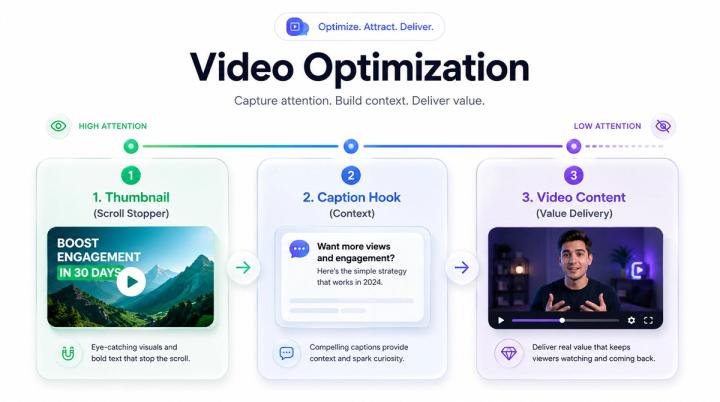
Your thumbnail stops the scroll. Your caption provides context and search discoverability. Your video content delivers on the promise.
For creators, brands, and digital media agencies scaling content distribution across TikTok, Instagram, YouTube, and Facebook simultaneously, a centralized optimization engine like vividspark.ai transforms this complex strategy into a repeatable, high-output workflow. In 2026, the digital space belongs to those who package their content with absolute clarity, deep audience relevance, and data-backed intent.