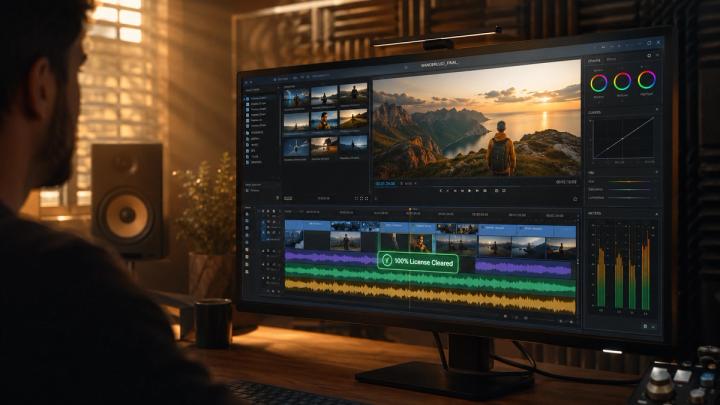
🎯 Quick Answer
Music licensing mistakes can lead to copyright claims, video removal, monetization loss, and legal problems. Many creators unknowingly use music incorrectly because they misunderstand how music rights work.
The most common mistakes include:
- ❌ Assuming “free music” means unlimited usage
- ❌ Using popular songs without commercial permission
- ❌ Ignoring platform-specific licensing rules
- ❌ Failing to check whether monetization is allowed
- ❌ Not keeping official proof of music licenses
💡 The safest solution: Using a professional, vetted platform like VividSound Library protects creators, improves workflow efficiency, and helps your videos grow across YouTube, TikTok, Instagram, and commercial platforms with licensed music.
🧠 Why Music Licensing Matters for Video Creators
Music is one of the most important elements in modern video production. Creators use background music to:
- enhance storytelling,
- create emotional connections,
- improve viewer retention,
- increase brand quality.
However, every piece of music has ownership rights. These rights determine who can use the music, where it can be used, whether it can generate revenue, and whether modifications are allowed.
Great content can lose its value instantly when the soundtrack creates copyright problems.
⚠️ 1. Mistake: Believing “Free Music” Means No Restrictions
One of the biggest misunderstandings among creators is assuming free music can be used anywhere. The term “free music” can mean many different things:
- free to download,
- free with attribution,
- free for personal use,
- free only on certain platforms.
It does not mean commercial use is allowed.
📊 Different Types of Music Usage Rights
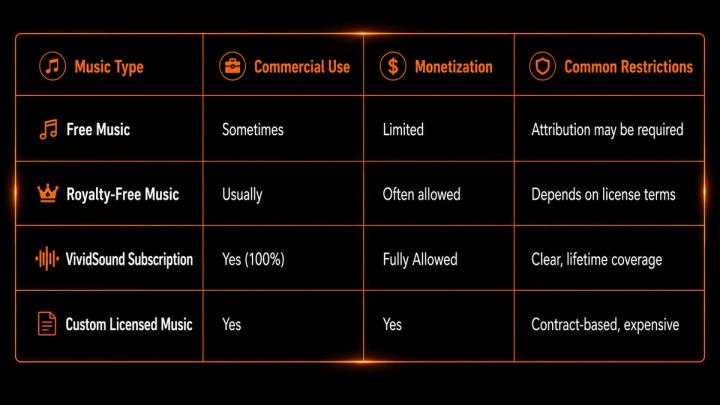
Always check the actual license agreement before publishing. Platforms like VividSound Library provide clear, transparent licensing terms with every download.
🎧 2. Mistake: Using Popular Songs Without Permission
Many creators assume that using a famous song for a short 5-second clip is acceptable under "fair use."
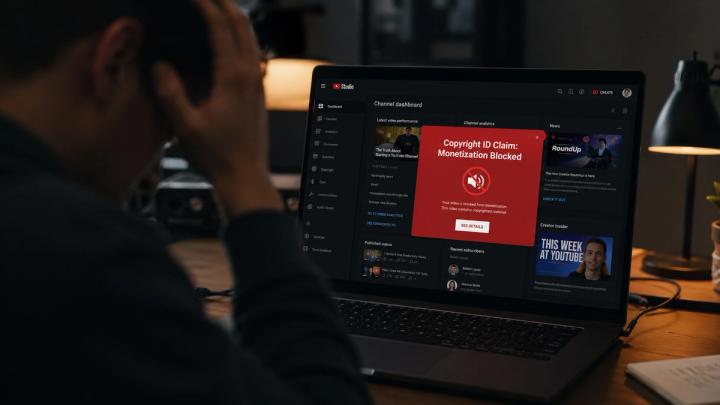
However, popular music is usually protected by strict copyright. Using copyrighted songs without permission can result in:
- YouTube Content ID claims
- Revenue redirected to copyright owners
- Video blocking or muted audio
- Social media platform bans
A song being popular on social media does not mean it is legally available for commercial creators to use.
💰 3. Mistake: Ignoring Commercial Usage Rights
A common mistake is using music that is allowed for personal vlogs but not for commercial projects.
📊 Personal vs Commercial Usage
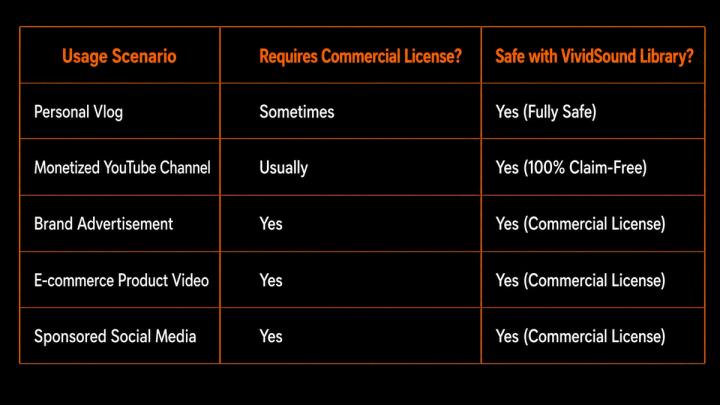
If money, promotion, or business value is involved, commercial licensing requirements are strictly enforced by platform algorithms.
📱 4. Mistake: Ignoring Platform-Specific Rules
Different platforms have different copyright detection systems. Creators often make the mistake of assuming: “If my music works on YouTube, it will work everywhere.” This is not always true.
Platform Differences:
- YouTube: Relies on Content ID detection to claim revenue.
- TikTok: Enforces Commercial Music Library (CML) rules for business accounts.
- Instagram/Facebook: Uses Meta Rights Manager to mute or block non-compliant audio.
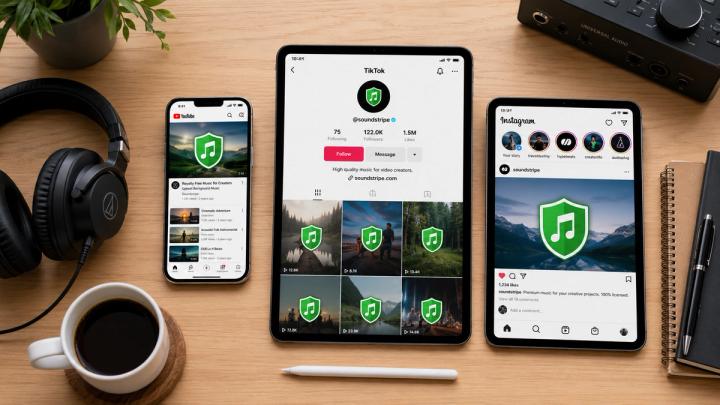
VividSound Multi-Platform Coverage: Every track in the VividSound Library is licensed for cross-platform publishing across YouTube, TikTok, Instagram, and Facebook.
📄 5. Mistake: Not Keeping License Proof
Even when creators legally purchase music, they sometimes forget to save documentation.
If automated systems generate a copyright claim by mistake, you must have immediate proof to dispute it. Important records include:
- License certificate (identifying you as the authorized user)
- Purchase confirmation
- Subscription active status
🛡️ If You Receive a Claim:
If you receive a Content ID claim on a track you licensed, do not file a dispute before checking what your license covers. Contact the support team at VividSound Library and we will help you work through it.
🎬 6. Mistake: Choosing Music Without Considering Usage Purpose
Licensing protects your video legally, but the right music makes it successful emotionally. Creators should align their music choice with their target audience and video category.
- Luxury & Real Estate: Minimal cinematic, ambient, and elegant music.
- Travel Vlogs: Emotional, uplifting, and acoustic music.
- Fitness & Sports: Energetic, high-BPM, motivational electronic music.
- Tutorials & Explainer Videos: Soft, non-distracting background instrumental music.
- Product Demos: Clean, modern, corporate, or lo-fi music.
🤖 7. How AI Music Search Helps Avoid Licensing Mistakes
AI-powered music platforms help creators find suitable music faster and safer.
Modern AI music search on VividSound Library simplifies your workflow by:
- Filtering by License Type: Showing only tracks available under a Commercial License.
- Analyzing Video Mood: Matching music with your specific emotional goals.
- Multi-Tag Search: Combining tempo (BPM), genre, and purpose (e.g., "Uplifting Vlog Tech Ad").
- Workflow Integration: Minimizing the time spent checking license terms so you can focus on editing.
✅ 8. Best Practices for Safe Music Usage
Creators can avoid most licensing problems by following these steps:
- Check Licensing Before Downloading: Never assume a track is free for commercial use.
- Verify Commercial Rights: Ensure monetization, advertising, and client work are allowed.
- Use Trusted Music Libraries: Stick to dedicated platforms like VividSound Library that can show you the licensing behind every track.
- Keep Digital Proof: Keep your own record of every track you license and the terms it came with.
- Match Music to Platforms: Confirm cross-platform safety before running multi-channel campaigns.
🚀 Why Licensed Music Helps Creators Grow
Using licensed music provides more than legal protection. It builds a professional brand, secures your monetization revenue, and allows you to collaborate with major sponsors without fear of legal action.
The best creators do not only create great videos—they build safe, sustainable, and well-documented production systems.
🎧 How VividSound Library Helps Creators
VividSound Library provides creators with a straightforward way to discover professional, licensed background music.
- Licensed Catalog: All tracks are pre-cleared for YouTube monetization and global commercial use.
- Clear License Terms: Each license sets out what your use covers, so you can check it before you publish.
- Smart AI Discovery: Find the exact song matching your video’s mood and pacing in seconds.
- Cross-Platform Peace of Mind: Publish safely across YouTube, TikTok, Instagram, and web advertisements.
👉 Ready to protect your content?
Explore the [VividSound Library Catalog] today and elevate your video storytelling with licensed, professional music.
❓ FAQ
1. Can I use any royalty-free music in YouTube videos?
Not always. "Royalty-free" only means you don't pay ongoing royalties. It does not mean it is free to use or safe for monetization. Always use a trusted source like VividSound Library to ensure YouTube commercial rights are included.
2. What happens if I use copyrighted music without permission?
Your video may receive a copyright claim, lose all monetization revenue, be muted, or face a copyright strike which can permanently damage your channel.
3. What should I do if I receive a copyright claim?
VividSound Library licenses the music in our catalog. When you use a track under a valid license, you are publishing with rights you can point to rather than relying on an unverified source. If an automated system still flags your video, contact our support team.
4. Do commercial videos and client projects need special music licenses?
Yes. Advertisements, sponsored content, and client videos require a commercial license. VividSound Library offers dedicated commercial licenses that protect both you and your clients.
5. What is the safest way to dispute an incorrect copyright claim?
If you believe a claim is mistaken, start by contacting the support team at VividSound Library so we can check that track's license with you before you respond.
✅ Conclusion
Music licensing mistakes are one of the biggest operational risks facing modern video creators.
By understanding licensing rules, keeping your own purchase records, and choosing reliable platforms like VividSound Library, you can build a safer, faster, and highly profitable video production workflow.
Licensed music is not just a legal requirement—it is the foundation for creating professional, scalable, and successful video content.