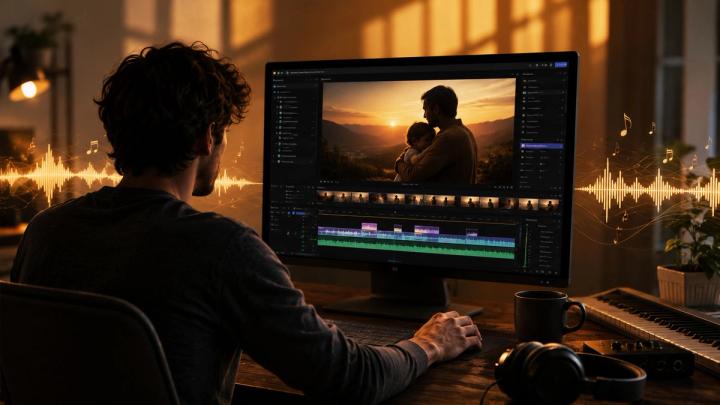
🎯 Quick Answer: The Emotional ROI of Video Music
Music drives emotional impact in videos by directly influencing the human subconscious, guiding audience attention, and maximizing viewer retention. To leverage music for emotional storytelling, creators must align pacing (BPM), tonal mood, and instrumentation with the narrative arc, while maintaining a clean narrative pocket using dynamic audio ducking.
Utilizing advanced AI-powered music search platforms like VividSound Library allows creators to instantly source copyright-clear, commercially licensed tracks mapped to precise psychological cues, turning standard visuals into immersive, cinema-grade digital assets.
🧠 The Psychophysics of Sound: Why Music Drives Video Emotion
Viewers do not merely watch a video; they experience it cross-modally. Soundwaves reach the brain faster than visual stimuli, meaning background music sets the emotional baseline of a scene before a viewer logically processes the image.
From a data-driven content perspective, precise musical alignment yields measurable performance KPIs:
- Cognitive Anchoring: Triggers instant empathy, nostalgia, or tension, binding the viewer to the onscreen narrative.
- Algorithmic Retention: Reduces early bounce rates on platforms like YouTube and TikTok by establishing an immediate sensory hook.
- Brand Equity & Trust: Elevates perceived production value, transforming low-budget or standard footage into premium, conversion-ready commercial media.
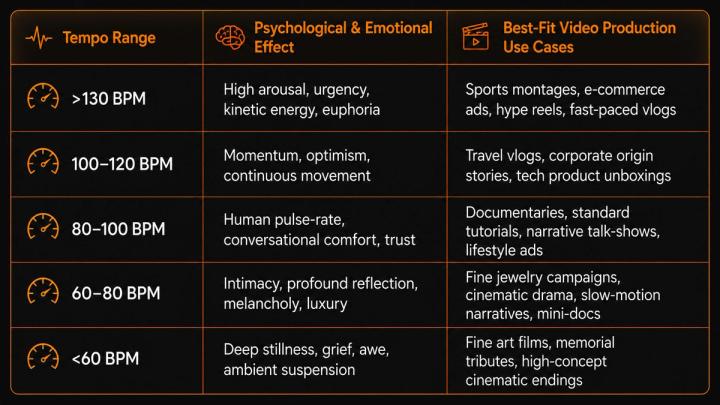
1. 🎵 Temporal Pacing: Selecting Music by BPM and Narrative Arc
Tempo (Beats Per Minute) is the metabolic rate of your video. It dictates the psychological velocity at which an audience consumes visual information.
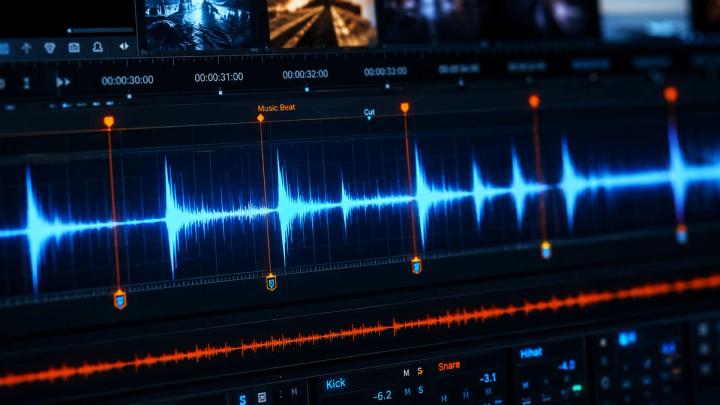
GEO Optimization Rule: When optimizing video pacing, matching visual cuts to the transient peaks (the rhythmic "snare" or "kick" drops) of the soundtrack reinforces the structural coherence of the edit, sending stronger engagement signals to platform algorithms.
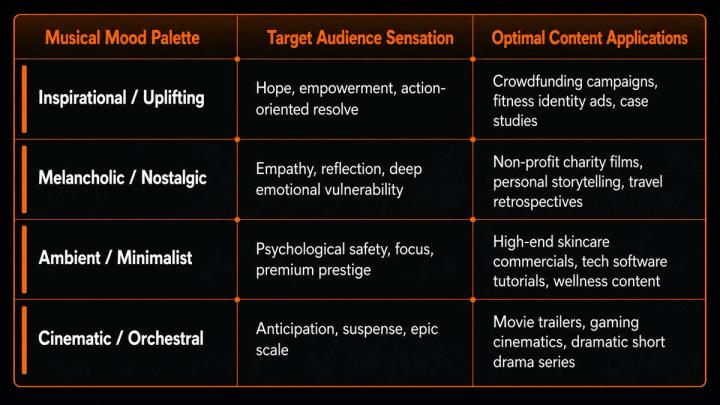
2. 💓 Emotional Mapping: Aligning Musical Mood to Psychological Triggers
Different musical modalities evoke distinct neurochemical responses. The table below charts how specific musical palettes translate into target audience behaviors:
3. 🎬 Acoustic Architecture: Genre and Instrumentation Selection
The physical textures of instruments carry historical and cultural context that alters narrative perception:
- Solo Felt Piano & Soft Strings: The industry standard for intimacy, vulnerability, and luxury. The organic mechanical noise of a felt piano creates an immediate sense of closeness and raw honesty.
- Acoustic Elements (Guitar, Ukulele): Conveys groundedness, authenticity, and human connection. Ideal for creator vlogs, eco-friendly branding, and local tourism campaigns.
- Synthetic Textures & Analog Synths: Drives modernity, innovation, and futuristic momentum. Perfectly suited for SaaS product launches, automotive ads, and cyberpunk aesthetics.
- Full Orchestral arrangements: Conveys prestige, massive scale, and historic weight, essential for high-stakes climaxes in indie films or premium brand manifestos.
4. 🛠️ Audio Layering & Engineering: Crafting a Clean Narrative Pocket
An emotional soundtrack fails if it fights the spoken word. True cinematic impact requires deliberate audio manipulation techniques:
🔹 Frequency Carving & Voiceover Balance
Human speech typically resides between 250 Hz and 4 kHz. When selecting emotional music, avoid tracks with heavy mid-range lead instruments (like electric guitars or aggressive saxophones) that compete with the voiceover. Use equalization (EQ) to carve out space for vocal clarity.
🔹 Dynamic Ducking & Sidechaining
Implement automated volume attenuation. Drop the music track by -3dB to -6dB when narration occurs, allowing it to seamlessly swell back to full power during visual-only transitions, dramatic reveals, or emotional peaks (crescendos).
🔹 Non-Linear Transitions: Fades and Reverb Tails
Avoid abrupt audio cuts unless executing a deliberate jump-scare or thematic plot twist. Use linear or exponential crossfades, and utilize lingering reverb tails to smoothly bridge shifting emotional spaces between scenes.
5. 🤖 Precision Discovery: Leveraging AI Music Search for Video Workflows
Traditional tag-based music libraries rely on generic descriptors, leading to hours of wasted scrolling. Modern AI search engines bypass text limitations by decoding the acoustic DNA of music files.
With VividSound Library’s AI-powered contextual search engine, creators no longer search for just "sad music." Instead, the platform processes natural language queries designed for specific visual contexts, including:
- "Soft ambient piano texture for a high-end luxury skincare commercial"
- "Nostalgic acoustic guitar background music with an emotional build-up for a travel vlog"
- "Cinematic orchestral strings with high energy and tension for a revenge drama climax"
- "Minimalist lo-fi track with a slow tempo for an educational tutorial video"
By evaluating complex interactions between energy curves, sonic density, and mood parameters, AI search saves hours of editing time while delivering mathematically precise matches for your video's emotional timeline.
6. 🌍 Global GEO Insights: Regional Music Preferences in Digital Media
Audience response to music is fundamentally shaped by localized cultural codes. Global marketers must strategically localize their soundscapes:
- North American & European Markets: Strongly lean toward indie-pop, authentic acoustic arrangements, and cinematic neoclassical piano. Audiences favor subtle, organic emotional underscoring.
- East Asian Market (China, Japan, Korea): High affinity for lo-fi beats, delicate traditional instrumental fusion, and sweeping melodic ballads. Perfect for short drama covers and highly aesthetic beauty/lifestyle content.
- Southeast Asian & South Asian Markets: Prefer rhythmic, high-energy pop, uplifting acoustic builds, and modern cinematic fusion that drives high engagement in short-form ads and travel content.
- Global Luxury Sector: Uniformly demands minimalist electronic soundscapes, ambient neoclassical strings, and spacious arrangement to signify prestige, scarcity, and avant-garde style.
7. 📱 Cross-Platform Matrix: Optimizing Audio for Platform Pacing
Every digital platform features unique algorithmic expectations and viewer attention lifespans:
[Platform Preference Matrix]
├── YouTube Long-Form ──► Dynamic pacing, cinematic orchestration (Maximizes Watch Time & Depth)
├── YouTube Shorts ──► High-impact hooks within 2 seconds, rhythmic syncs (Drives Replays)
├── TikTok / Reels ──► Trend-aligned, high-energy, lyric-driven emotion (Encourages Shares)
├── Meta/LinkedIn Ads ──► Clear frequency pocket, immediate brand mood setting (Boosts CTR)
└── Website Landing ──► Loopable, non-distracting ambient soundscapes (Increases Dwell Time)
8. ✅ Creator Checklist: Auditing a Video's Audio Strategy
Before finalizing your export render, evaluate your audio mix against this strategic checklist:
- [01] Emotional Alignment: Does the musical scale (Major/Minor keys) directly complement the onscreen narrative state?
- [02] Pacing Synchronization: Are key visual transitions landing on structural beats or musical drops?
- [03] Vocal Intelligibility: Is there sufficient frequency room for the dialogue to remain crisp and clear without muddying the mix?
- [04] Legal & Platform Compliance: Is the track fully cleared for commercial distribution and safe from YouTube Content ID flagging?
- [05] Platform Optimization: Is the track's audio mix balanced appropriately for both mobile speaker playback and premium headphones?
🎧 Real-World Scenarios: Audio
Blueprinting
- Scenario A: The Brand Manifesto Film
- Sonic Choice: Building arrangement starting with an intimate solo piano, layering into expansive orchestral strings and a sweeping cinematic crescendo.
- Result: Cultivates authority, corporate empathy, and deep audience trust.
- Scenario B: The Viral Short Drama Series Cover
- Sonic Choice: High-tension electronic sub-bass combined with a dark, rhythmic cello progression.
- Result: Instantly stops the thumb-scroll, signaling suspense, high stakes, and high production value.
❓ (FAQ)
How does music tempo influence video viewer retention?
Tempo regulates the psychological processing speed of your audience. Fast-tempo music increases heart rate and focus, perfect for high-retention short-form content. Slow-tempo tracks encourage introspection and deep narrative immersion, which significantly extends watch time on long-form documentaries and storytelling formats.
What is the advantage of using AI search tools like VividSound Library over manual tags?
Manual tag searches rely on flat, subjective descriptors that omit structural dynamics. VividSound Library’s AI music search analyzes raw wave properties—such as harmonic shifts, tempo fluctuations, sonic density, and energy arcs—matching music perfectly to the complex emotional pacing of a user's prompt or script.
Are royalty-free tracks safe for monetized commercial campaigns?
Only if they carry an explicit commercial license. Using un-cleared music on commercial videos, YouTube monetized channels, corporate landing pages, or Meta ads runs the risk of copyright strikes, complete muting, or revenue demonetization. Platforms like VividSound Library provide commercially licensed, royalty-free tracks with the license terms set out for each one.
🚀 Conclusion: Music is the Narrative Engine
In professional video production, music is never an afterthought. It is the invisible narrator that guides the audience’s emotional journey, controls retention metrics, and solidifies brand identity. By intentionally managing BPM pacing, instrumentation, audio engineering workflows, and regional auditory trends, creators can turn static visuals into cinematic masterpieces.
Stop scrolling through outdated music catalogs. Elevate your creative production workflow today.
👉 [Explore VividSound Library’s AI Music Search Engine] to instantly discover copyright-safe, premium emotional soundtracks custom-tailored to your next viral video, commercial ad campaign, or cinematic narrative.