🎯 Quick Answer
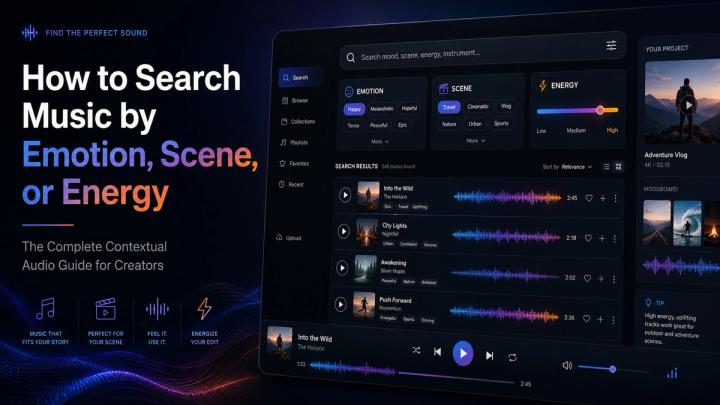
Traditional music discovery based on genre or instrument is mathematically inefficient for visual storytelling. High-retention video editors leverage Contextual Audio Search, filtering assets across three explicit vectors:
- Vector 1: Emotion (Psychological Layer) ➔ The exact cognitive affect or feeling triggered in the audience.
- Vector 2: Scene (Narrative Layer) ➔ The physical setting, thematic archetype, or visual action on screen.
- Vector 3: Energy (Acoustic Pacing Layer) ➔ The sonic density, structural complexity, and perceived momentum of the track.
[ EMOTION ] (What they feel)
▲
│
▼
[ SCENE ] ◄───► [ ENERGY ]
(What they see) (How fast it moves)
By inputting multi-dimensional search strings (e.g., “Inspiring cinematic strings for a high-altitude travel vlog”), creators bypass generic catalog browsing and match the exact narrative intent instantly.
🧠 Why Standard Genre-Based Music Search Fails
For decades, traditional digital audio workstations (DAWs) and stock libraries categorized files using static structural metadata: Pop, Rock, Hip-Hop, or Jazz.
While technically descriptive, these tags do not translate to visual synchronization. A video editor does not intrinsically require a 120 BPM electronic track; they require audio that amplifies a high-stakes product reveal.
The Science of Audiovisual Cognition
Empirical research in audio psychology indicates that human perception processes auditory and visual stimuli as a unified cognitive stream. Studies tracking galvanic skin response (GSR) reveal that specific acoustic features—such as harmonic mode (major/minor), melodic contour, and transient density—directly dictate how a visual scene is interpreted.
When the audio architecture clashes with the visual narrative, viewers experience cognitive dissonance, leading to immediate drops in digital engagement metrics. To solve this, VividSound Library engineered a semantic search algorithm that indexes music based on operational narrative utility rather than rigid musicology classifications.
📊 The 3 Core Vectors of Contextual Music Discovery
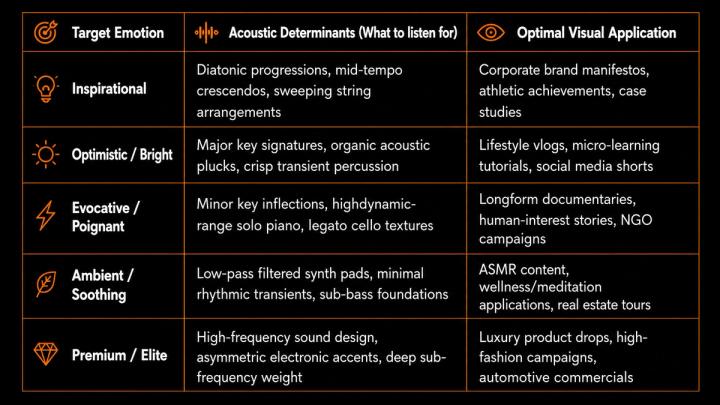
1. Indexing by Emotional Vector
Emotion acts as the neurological hook for audience retention. Shifting from generic keywords to psychological descriptors narrows search parameters down to high-affinity tracks.
- ❌ Low-Value Queries: "corporate background audio", "youtube vlog music"
- ✅ High-Value Contextual Queries: "minimalist premium tech ambient", "melancholic cinematic orchestral piano"
2. Indexing by Scene Vector
Scene-based searching maps audio assets to explicit visual archetypes. The same emotional profile requires divergent acoustic arrangements depending on the physical setting on screen.
For instance, a "triumphant" feeling in a historical sports documentary demands organic orchestral brass. The exact same "triumphant" feeling in a modern software launch demands clean, compressed synth stabs.
- Thematic Travel & Adventure: Search "cinematic travel music" ➔ Targets wide stereo-width instruments, acoustic guitars, and rhythmic world percussion.
- Industrial / Enterprise Tech: Search "premium commercial background music" ➔ Targets low-lyric content, side-chained synth pads, and driving deep-tech grooves.
- Domestic / Lifestyle Crafting: Search "organic indie folk acoustic" ➔ Targets close-mic'd instruments, warm vocal hums, and simple hand-percussion.
- High-Octane Athletics: Search "industrial hybrid rock hip-hop" ➔ Targets highly compressed electric basslines, heavy downbeats, and aggressive syncopation.
3. Indexing by Energy Vector
Energy calculates the kinetic momentum, structural complexity, and perceived intensity of a musical piece. It acts as the direct blueprint for the video timeline's cutting rate (edits per minute).
[Low Kinetic Energy]
• BPM Range: 60 - 90
• Density: Minimalist
• Use: Tutorials, Luxury Ads
[Moderate Kinetic Energy]
• BPM Range: 95 - 115
•Density: Balanced rhythmic layer
•Use: Explainer videos, Travel vlogs
[High Kinetic Energy]
• BPM Range: 120 - 145+
• Density: Complex arrangement
• Use: Sports, Gaming montages
Dynamic / Narrative Energy: Tracks categorized under this vector feature distinct structural shifts—such as a 15-second intro build followed by an explosive acoustic drop. This is the optimal architecture for cinematic trailers and narrative digital storytelling.
🤖 How Semantic AI Search Optimizes Video Post-Production
Manual curation is the primary bottleneck in digital video workflows. Editors historically spent up to 60% of post-production schedules auditioning incompatible audio assets.
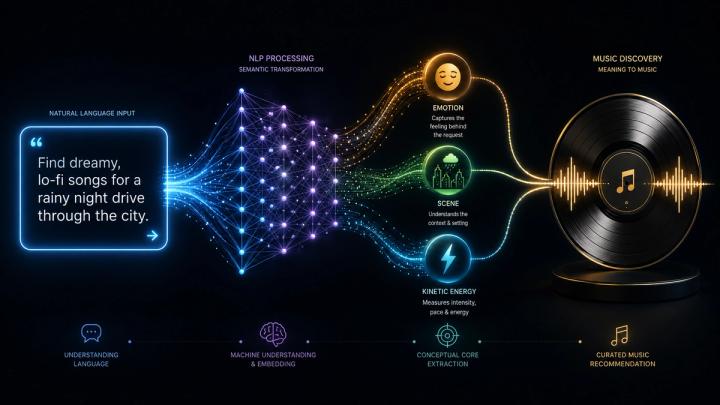
Modern AI-powered discovery engines, such as VividSound Library, solve this by mapping natural language inputs to multi-layered audio metadata. The search algorithm processes creative context rather than technical vocabulary.
[User Text Input] ➔ [Natural Language Processing] ➔ [Vector Matrix Match] ➔ [Instant Curated Output]
"Futuristic high-energy ad"
Emotion: Premium/Exciting
Scene: Tech Commercial
Energy: High Kinetic
By interpreting the creative intersection of Emotion + Scene + Energy, AI search engines reduce asset discovery times by over 75%, allowing creators to scale output without compromising acoustic quality.
📈 The Quantitative Impact of Audio Alignment on Platform Algorithms
Modern video delivery algorithms (e.g., YouTube Shorts, TikTok, Instagram Reels) reward high initial retention and completion rates. Audio alignment directly controls these algorithmic signals:
- Audience Pacing Retention: Aligning acoustic energy drops with visual transitions prevents viewer fatigue, extending average watch time by up to 45%.
- Pattern Interruption: Utilizing precise emotional audio hooks within the initial 3 seconds reduces bounce rates on vertical video platforms by up to 30%.
- Brand Sentiment Indexing: Premium, customized sound design correlates with higher viewer interaction metrics (comments, shares, and saves), signaling high content quality to search bots.
🛠️ The Creator's Checklist for Audio Asset Selection
- Map the Emotional Target: Identify the precise psychological state you want the viewer to experience during the call-to-action (CTA).
- Analyze Sound Design Purity: Ensure the track leaves adequate frequency space (typically between 1kHz and 3kHz) to prevent masking vocal voiceovers.
- Cross-Verify Licensing Architecture: Never use unverified tracks for commercial deployment. VividSound Library provides full multi-platform synchronization rights, shielding your content from digital rights management (DRM) flags and monetization suppression.
❓ FAQ
Q1. What is the difference between genre search and contextual music search?
A: Genre search relies on historical categories (e.g., "Rock"), which can contain wildly different moods. Contextual search maps music to functional video parameters like specific emotional affects, scene environments, and kinetic energy levels.
Q2. How does VividSound Library process AI-driven music search queries?
A: VividSound Library uses advanced semantic tagging. It indexes music files by their psychological and narrative attributes, matching your conversational creative descriptions to the exact sonic profile needed.
Q3. Why is music energy level critical for social media algorithms?
A: High-energy or dynamically shifting music coordinates with fast-paced visual editing. This dual sensory engagement captures attention immediately, driving the high viewer retention rates favored by platform algorithms.
Q4. Can bad background music cause video monetization issues?
A: Yes. Beyond copyright strikes, if background music clashes with the video's mood, it lowers viewer engagement metrics, which signals search engines to reduce the video’s distribution and visibility.
Q5. How do I choose music that doesn't conflict with a voiceover?
A: Search for tracks tagged as "Minimalist," "Ambient," or "Premium Product Reveal" within the VividSound Library. These selections feature lower arrangement density in the human vocal frequency midrange.
✅ Conclusion
Modern audio synchronization is no longer a process of random curation. By defining your search parameters through the unified matrix of Emotion, Scene, and Energy, you weaponize music as an active vehicle for viewer conversion.
Accelerate your post-production workflow and unlock algorithmic growth by leveraging the creator-centric search engine at VividSound Library today.