
⚡ Quick Answer
To detect and update background music in a video without losing dialogue, creators can adopt an AI-assisted audio workflow. Modern systems analyze audio using fingerprinting technology to flag potential copyright risks, apply source separation (stem isolation) to reduce unwanted background music while protecting dialogue, and integrate licensed alternative soundtracks before publication.
The recommended pre-publishing audio check workflow:
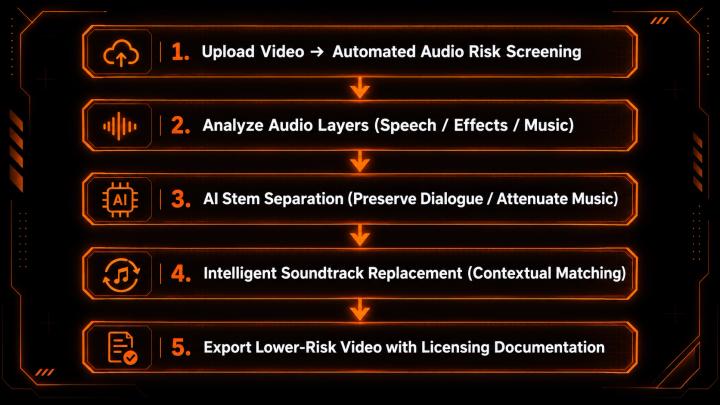
Upload Video → AI Risk Screening → Identify Audio Layers → AI Stem Separation (Dialogue Preservation) → Match Licensed Replacement → Export Lower-Risk Video
📌 Key Definitions for Video Creators
What is copyrighted music detection?
Copyrighted music detection is the process of analyzing an audio signal to identify music that may correspond to protected recordings or compositions. Automated systems commonly use audio fingerprinting or related spectral-matching technologies to compare audio characteristics with reference databases. A detected match indicates potential rights considerations; it does not by itself determine whether a particular use is legally authorized.
Can AI detect copyrighted music before uploading?
Yes, but with an important distinction. AI can identify music, compare audio fingerprints against reference databases, and flag potential copyright risks before publication. However, only a rights holder or a platform's official rights-management system (such as YouTube Content ID) can determine whether a match will result in a claim or restriction on that platform. Pre-upload detection should be treated as risk screening rather than an absolute guarantee against copyright actions.
🎬 Why Background Music Poses Risks for Creators
Background music is essential for narrative pacing and viewer engagement across vlogs, tutorials, and short-form media. However, background audio remains a frequent source of automated claim notifications, audio muting, and monetization redirection.
Common issues faced after publishing include:
- Revenue Allocation: Ad revenue may be claimed by or shared with copyright owners.
- Audio Muting: Videos may be muted automatically in select regions or globally.
- Geographic Restrictions: Content distribution may be limited based on territorial licensing rights.
- Production Rework: Editors often have to manually re-cut and re-render videos after publication.
YouTube reports that Content ID generates copyright claims at an enormous scale, making automated rights detection a routine part of video publishing. Pre-upload risk screening helps creators address audio conflicts before videos reach public audiences.
🧠 How Audio Detection and Fingerprinting Work
Modern copyright detection relies on digital audio fingerprinting rather than simple file matching or volume analysis.
What Is Audio Fingerprinting?
Audio fingerprinting converts characteristics of an audio signal into a compact digital representation that can be compared against reference recordings. Automated algorithms evaluate psychoacoustic properties, including:
- Spectrogram frequency contours
- Rhythmic structure and tempo (BPM)
- Harmonic progressions and timbre
- Acoustic feature distribution
[ Upload Video ] ➔ [ Extract Audio Signal ] ➔ [ Generate Audio Fingerprint ]
[ Apply Platform Policy ] [ Match Identified ]
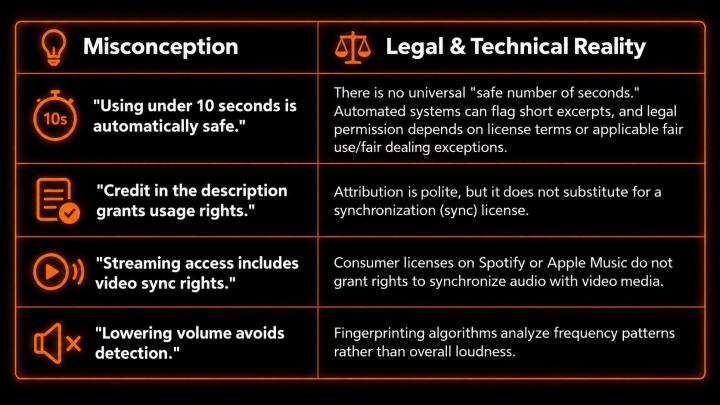
Lowering music volume or placing tracks underneath voiceover does not automatically bypass detection. Fingerprinting algorithms are specifically built to identify spectral signatures even when obscured by speech or environmental noise.

🔍 Common Misconceptions vs Licensing Realities
🤖 The Role of AI in Source Separation and Replacement
When an audio track contains background music that needs replacing, creators face a challenge: removing the music without destroying the spoken dialogue.
AI Stem Separation
Modern source-separation models use deep neural networks to decompose a mixed audio track into discrete components:
- Dialogue / Vocal Layer: Isolated for speech clarity.
- Ambient Sound / FX Layer: Retained for natural scene atmosphere.
- Background Music Layer: Isolated for attenuation or replacement.
Modern source-separation models can isolate speech, vocals, and musical accompaniment with high fidelity, although results vary depending on audio complexity, overlap, noise, and recording quality.
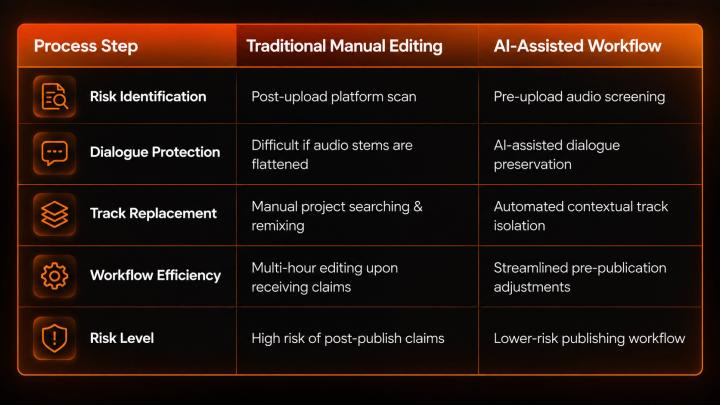
📊 Comparing Manual Rework with AI-Assisted Workflows
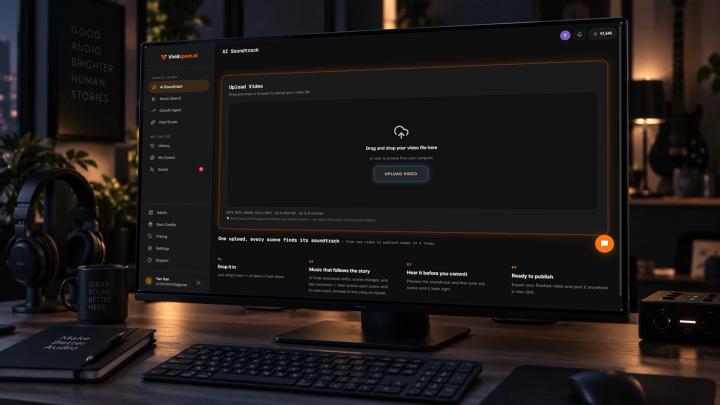
🚀 Implementing Risk-Screening Workflows with VividSpark
Platforms like VividSpark implement these AI-assisted audio workflows to help creators streamline production and reduce publishing risks.
VividSpark integrates:
- 🔍 Pre-Upload Audio Screening: Analyzes uploaded files to flag potential music matches before publishing.
- 🎧 AI Dialogue Preservation: Uses source separation to isolate background music while keeping spoken voiceover clear.
- 🎵 Contextual Track Matching: Replaces flagged or unwanted audio with commercially licensed alternatives matched to scene pacing.
- 🌐 Multi-Platform Preparation: Exports videos configured with clear licensing records for multi-platform distribution.
❓ FAQ
Q1.How many seconds of copyrighted music can be used legally without a license?
A: There is no universal “safe number of seconds.” Even a short excerpt may trigger an automated copyright claim, while whether a particular use is legally permissible depends on the applicable copyright law, licensing status, and exceptions such as fair use or fair dealing.
Q2.Can AI remove background music without deleting the voiceover?
A:Yes. Modern AI stem separation can isolate speech frequencies from background musical accompaniment, assisting creators in attenuating background tracks while preserving dialogue.
Q3.Does lowering background music volume prevent copyright claims?
A:Not reliably. Automated matching algorithms analyze frequency signatures and rhythmic patterns rather than relative volume.
Q4.Is royalty-free music completely exempt from copyright?
A: No. Royalty-free music is still protected by copyright. "Royalty-free" means the user pays a single license fee (or subscription) rather than ongoing royalties per view, subject to specific license conditions.
Q5.Does pre-upload screening guarantee no copyright claims will occur?
A:No. Pre-upload screening acts as a risk-reduction tool by checking available reference databases. Official copyright claims can only be issued by platforms or rights holders directly.
🏁Conclusion
Navigating video soundtrack compliance requires moving away from reactive post-upload fixes—such as waiting for platform warnings, muting flagged tracks, or spending hours re-editing published videos. Embracing a proactive, AI-assisted pre-publication workflow allows creators to screen audio risks, protect essential speech, and integrate cleared replacement music before content reaches an audience. By combining intelligent risk detection, precise audio source separation, and verified commercial licensing, tools like VividSpark help creators safeguard channel monetization and streamline multi-platform distribution while keeping visual storytelling seamless and impactful.