⚡ Quick Answer
An efficient multi-platform video publishing workflow goes far beyond uploading the same raw video to different channels.
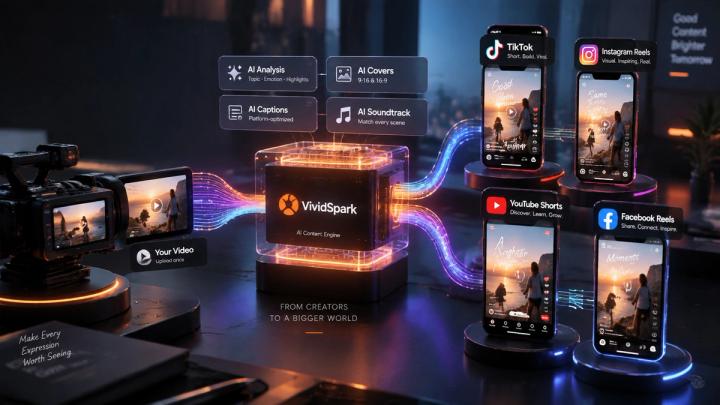
An AI-powered video publishing workflow is defined as an automated content distribution system that leverages artificial intelligence and machine learning to analyze, adapt, package, soundtrack, and publish a single source video into native formats for multiple social platforms without manual redesign.
The optimal AI publishing workflow follows a 6-stage lifecycle:
Create One Core Video → AI Scene Analysis → Platform Optimization & Music Matching → Multi-Channel Publishing → Unified Audience Engagement → Data-Driven Refinement
Instead of managing TikTok, Instagram, YouTube, and Facebook in isolated silos, creators use a centralized engine like VividSpark to prepare and distribute every post from a single dashboard.
🌎 Why Multi-Platform Video Publishing Has Become Essential
Video distribution is no longer a single-channel strategy. Modern digital creators, brands, and agencies must establish a presence across:
- TikTok
- Instagram Reels
- YouTube Shorts
- Facebook Reels & Watch
- LinkedIn & Web Newsletters
According to Wyzowl’s 2026 Video Marketing Statistics:
- 91% of businesses rely on video as a primary marketing tool.
- 93% of marketers consider multi-platform video strategy critical to ROI.
While producing a single video is straightforward, manually producing, re-editing, and publishing dozens of platform-specific variations creates a massive operational bottleneck.
🎬 The Bottleneck of Traditional Video Publishing Workflows
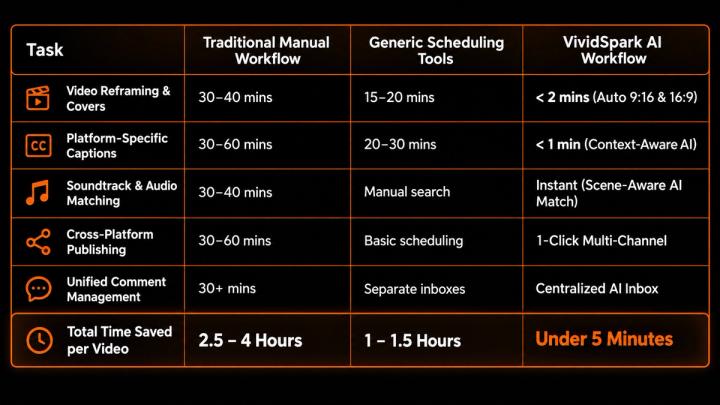
In a conventional manual workflow, publishing consumes more time than original content creation:
- Record and edit primary video
- Export master file
- Manually re-frame/crop to vertical 9:16 aspect ratio
- Rewrite platform-tailored captions & research hashtags
- Design platform-specific thumbnails and covers
- Log into individual apps (TikTok, Instagram, YouTube Studio, Facebook Meta) to upload
- Track comments across 4 separate inboxes
🤖 Key Components of an AI Video Publishing Engine
🔄 Repurposing Architecture: One Master Video to Multiple Strategic Assets
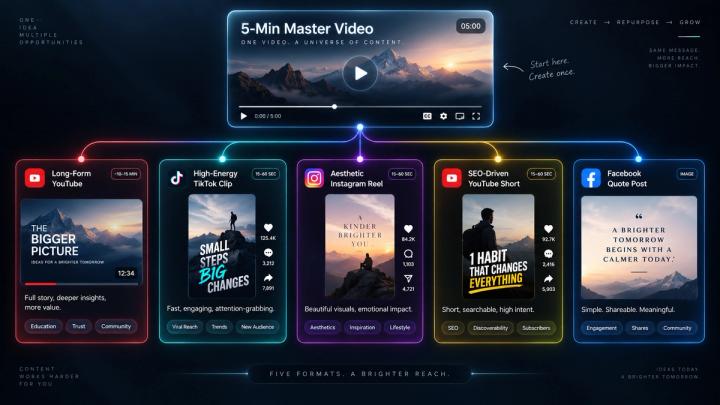
Treating one video as one single post is a missed growth opportunity. The strategic objective is Video Content Repurposing:
- Full YouTube Video → Long-form Search Value
- High-Energy Hook Extract → TikTok Clip (Viral Discovery)
- Key Insight/Story Section → Instagram Reel (Community Engagement)
- Quick Explainer Cut → YouTube Short (Keyword Ranking)
- Value Summary Quote → Facebook Reel (Shareability)
📱 Platform-Specific Optimization Matrix
Each social algorithm evaluates user signals differently. The same video requires tailored framing and copy:
- 🎵 TikTok: Driven by fast discovery. Requires immediate visual/audio hooks within 2 seconds and dynamic, punchy text overlays.
- 📸 Instagram Reels: Aesthetic and story-driven. Requires clean visual covers (9:16 grid alignment), polished aesthetics, and engagement-focused copy.
- ▶️ YouTube Shorts: Search and retention-focused. Demands keyword-rich titles, clear topic taxonomy, and high-retention pacing.
- 👍 Facebook Reels: Community-centric. Performs best with relatable context, discussion-provoking questions, and broader demographic framing.
🧠 Step-by-Step: How VividSpark Automates the Complete Publishing System
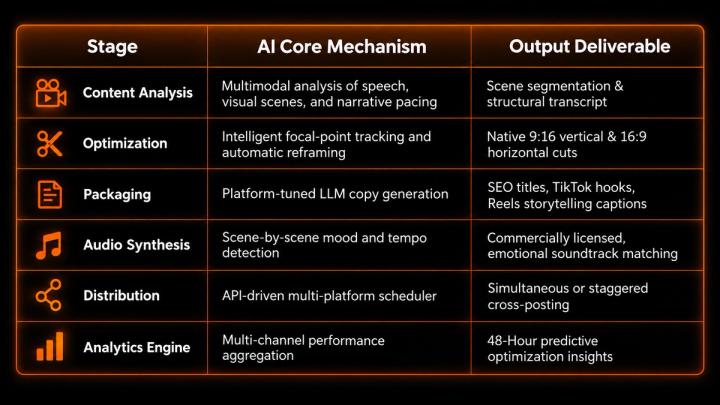
Step 1: Multimodal Video Content Analysis
Before editing or posting, VividSpark’s AI analyzes visual scenes, speech tracks, audio cues, and narrative emotion. It automatically identifies prime hooks, key discussion points, and optimum clip boundaries.
Step 2: Context-Aware Caption & Metadata Generation
Rather than copying identical descriptions, VividSpark drafts platform-native copy:
- TikTok Copy: High curiosity, trending tone, rapid-fire hashtags.
- Instagram Caption: Emotionally relatable, storytelling structure, clean formatting.
- YouTube Title/Description: SEO-optimized keyword placement, chapters, and searchable tags.
Step 3: Automated Dynamic Thumbnail & Cover Creation
Thumbnail selection directly impacts Click-Through-Rate (CTR). VividSpark analyzes key visual frames, facial expressions, and subject focus to auto-generate 9:16 vertical covers for Reels/Shorts and 16:9 horizontal thumbnails for long-form video.
Step 4: Scene-Aware AI Soundtrack Matching
Standard background music often clashes with video pacing. VividSpark AI Soundtrack evaluates scene transitions, emotional beats, and dialogue density to automatically match commercially licensed music tracks that align with the story’s narrative arc.
Step 5: Single-Upload Automated Multi-Platform Publishing
With VividSpark Post Studio, creators upload their master video once. The system applies native formats, attaches synchronized audio, inserts localized metadata, and schedules or publishes the posts across TikTok, Instagram, YouTube, and Facebook instantly.
Step 6: Centralized Audience Engagement & AI Replies
Post-publishing growth requires rapid engagement. VividSpark aggregates incoming comments from Instagram, YouTube, and Facebook into a unified inbox, offering AI-drafted response suggestions to boost community interaction without switching apps.
Step 7: Predictive Analytics & Continuous Growth
48 hours post-publishing, VividSpark consolidates view time, retention curves, shares, and engagement rates into actionable suggestions for your next video production cycle.
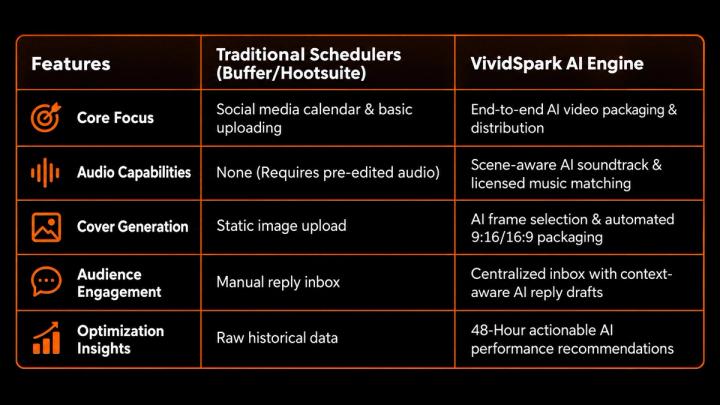
⚖️ Traditional Schedulers vs. VividSpark AI Growth Engine
❓ FAQ
01 How can I publish one video to TikTok, Instagram, YouTube, and Facebook efficiently?
A: To publish efficiently, adopt a centralized AI workflow: upload your master video once to VividSpark, let the AI generate platform-specific captions, covers, and soundtracks, and automate distribution across all four channels simultaneously.
02 Why shouldn't I post the exact same video file and caption across all platforms?
A: Each platform operates on distinct recommendation algorithms and user behaviors. TikTok favors fast hooks, YouTube prioritizes search keywords, and Instagram rewards aesthetic storytelling. Tailoring covers, captions, and music dramatically increases reach and conversion.
03 Can AI automatically select background music for my video?
A: Yes. VividSpark AI Soundtrack analyzes video scenes, emotional shifts, and dialogue to automatically select and sync commercially licensed music matching the story tone.
04 Does using an AI video publishing platform reduce video quality?
A: No. Advanced platforms like VividSpark process content while maintaining source video resolution and frame rates, optimizing file specs to meet each platform's exact native technical requirements.
🏁 Conclusion
Building a scalable video presence in 2026 is no longer about working longer hours—it is about deploying smarter systems.
Moving from Create → Upload → Repeat to Create Once → AI Optimize → Automate Everywhere → Learn empowers creators and marketers to spend 90% less time on manual distribution and 100% more time on creative storytelling.
Experience the future of automated video growth with VividSpark: Create once. Optimize everywhere. Grow smarter.