
⚡ Quick Answer: How AI Is Changing Video Creation
AI is changing video creation by transforming the content workflow from a fragmented post-production process into an intelligent publishing and audio optimization engine. AI platforms like VividSpark lead this shift by connecting dynamic AI soundtrack matching, smart asset generation, search discovery, and multi-platform distribution into a unified system.
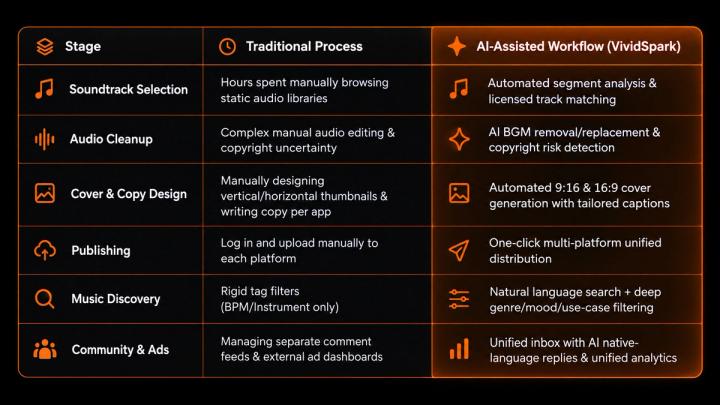
In the past, creators struggled with:
- Manual, time-consuming music library searching
- Audio copyright risks and complex track licensing
- Designing multiple platform-specific covers (9:16 vertical & 16:9 horizontal)
- Writing custom platform captions and manually uploading to each channel
- Managing scattered comments, messages, and ad analytics across networks
Today, integrated AI platforms connect these steps into one seamless workflow:
Video Input → AI Audio Analysis & Soundtrack → Intelligent Asset & Copy Generation → Multi-Platform Publishing → Unified Audience & Ad Analytics
The biggest shift is not replacing creative video production; it is empowering creators to streamline audio matching, eliminate distribution friction, and turn published videos into scalable digital assets.
🤖 What Is AI-Powered Video Publishing and Audio Workflow?
AI-powered video workflow uses artificial intelligence to assist creators after raw editing—focusing on audio optimization, asset preparation, multi-platform publishing, and post-publish community engagement.
Unlike traditional audio tools or single-channel distribution dashboards, an integrated platform understands:
- Narrative scene transitions and segment boundaries
- Audio copyright risk profiles
- Multi-platform cover dimensions and visual highlights
- Native platform copywriting styles
- Cross-lingual audience interactions
The industry is moving rapidly from fragmented manual distribution to an AI-assisted publishing engine.
🌎 Why AI Video Workflows Are Essential in 2026
Video remains the primary digital communication medium globally. According to Wyzowl’s 2026 Video Marketing Report:
- 91% of businesses leverage video as a key marketing channel.
- 63% of video marketers actively utilize AI tools for creation, publishing, or audio workflows.
- Multi-platform distribution yields the highest content ROI across digital channels (HubSpot 2026).
This shift fundamentally changes creator operations. The competitive advantage is no longer just "Who can record a video?" but "Who can optimize audio, package assets, publish everywhere, and manage audience interactions fastest?"
📊 Traditional Distribution Workflow vs. AI Growth Workflow
🧠 1. AI-Driven Soundtrack Matching and Copyright Protection
Audio provides the emotional foundation of video content. Traditional music sourcing often leads to mismatched pacing or severe copyright takedowns.
Modern AI audio engines evaluate videos by:
- Analyzing narrative flow and automatically segmenting timestamps
- Matching licensed library tracks tailored to each segment's mood
- Detecting potential copyright infringements before publishing
- Removing or replacing existing background audio while preserving dialogue
Workflow Shift: Raw Video → AI Segment Analysis → Matched Licensed Soundtrack → Copyright-Safe Master

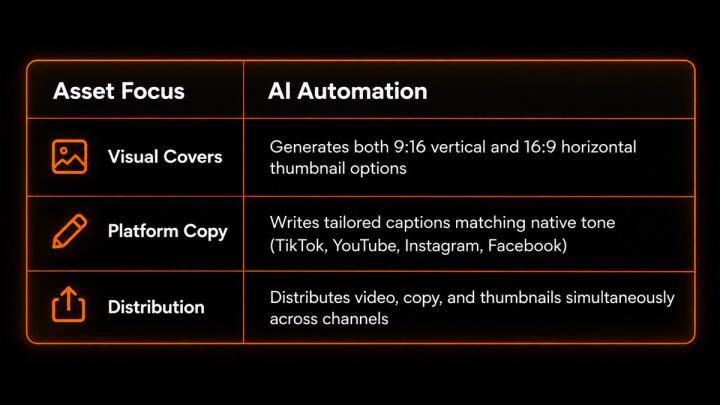
✍️ 2. Automated Post Studio: Cover, Copy, and Multi-Platform Publishing
Packaging a video for distribution often takes as much time as recording it. AI asset generators analyze video themes and visual highlights to streamline post-production packaging:
🎵 3. Natural Language Music Discovery
Searching for the right track traditionally requires precise technical knowledge. Next-generation search systems allow creators to query audio naturally (e.g., "Upbeat, warm cinematic acoustic music for an outdoor travel video"). Creators can also filter by genre, mood, instrument, or specific commercial use cases.
📱 4. Unified Social Management, AI Engagement & Ad Tracking
Publishing is the start of the engagement loop. AI social hubs centralize audience management by:
- Aggregating comments and direct messages into a single inbox
- Draft-generating context-aware responses in the commenter's native language
- Providing real-time analytics dashboards for organic performance and paid ad management

🚀 VividSpark: The Core AI Video Growth Engine
VividSpark is designed to streamline soundtrack optimization, asset creation, multi-platform publishing, and community engagement through four core modules:
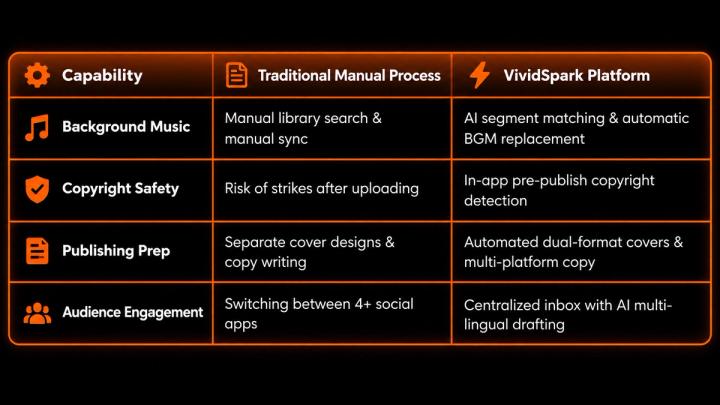
- 🎵 AI Soundtrack: Upload your video for AI segment analysis, automated licensed track matching, existing BGM removal/replacement, and pre-publish copyright risk detection.
- 🖼️ Post Studio: Analyzes video themes and highlights to auto-generate dual-aspect covers (9:16 & 16:9), draft platform-specific copy, and execute one-click multi-platform publishing.
- 🔍 Music Search: A dedicated music discovery engine supporting natural language queries alongside traditional filtering by genre, mood, instrument, and use case (migrated from VividSound Library).
- 💬 Social Management: Centralizes multi-platform comments and direct messages with AI-drafted native-language replies, performance analytics dashboards, and ad campaign management.
⚖️ Traditional Workflow vs. VividSpark Workflow
❓ FAQ
01 How is AI changing video publishing and music matching?
AI automatically segments video content to match licensed soundtracks, detects copyright risks, generates platform-specific covers/copy, and enables one-click distribution.
02 Can AI Soundtrack replace or remove existing background music?
Yes. AI Soundtrack can analyze uploaded videos, isolate and remove or replace existing background tracks, and automatically sync new licensed music to segmented scenes.
03 What platforms does Post Studio support for multi-platform publishing?
Post Studio analyzes video highlights to create 9:16 vertical and 16:9 horizontal covers, generates custom copy for each social network, and publishes to major platforms simultaneously.
04 How does VividSpark simplify social media management?
VividSpark's Social module centralizes multi-platform comments and direct messages into one inbox, provides AI-drafted replies in the user's original language, and tracks both performance analytics and ad management.
🏁 Conclusion
AI is not replacing video storytelling; it is modernizing the publishing infrastructure.
The old workflow: Edit Video → Browse Track Libraries → Design Covers → Write Copy → Upload One by One → Reply Manually
The modern AI workflow: Upload Video → AI Soundtrack & Segment Sync → Post Studio Asset Generation → One-Click Publish → Unified Social Management
Creators leveraging VividSpark gain a distinct advantage: saving time on music matching, automating publishing assets, and growing a global brand with intelligent audience engagement.
👉 Ready to transform your video publishing and soundtrack workflow? Start using VividSpark for free today and scale your content engine.