⚡ Quick Answer
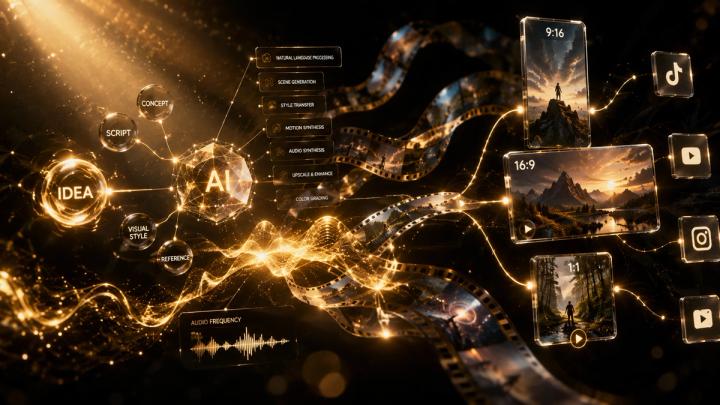
The modern AI video creation workflow combines artificial intelligence with every stage of production—from initial ideation and script structuring to automated editing, scene-aware soundtrack selection, multi-platform publishing, and analytics.
Instead of jumping between isolated software applications, forward-thinking creators adopt an integrated pipeline:
Idea → Script → Production → AI Editing → Audio-Visual Alignment → Multi-Platform Publishing → Performance Analysis
AI does not replace human storytelling; it eliminates repetitive technical friction. By leveraging integrated creator growth platforms such as VividSpark.ai, creators can establish a repeatable system that transforms a single creative concept into multiple optimized assets across social channels.
📈 Why AI Video Creation Workflows Are Becoming Essential
Video has become the primary format for global digital communication. Independent YouTubers, social media influencers, agencies, and enterprise brands all rely on video to drive audience engagement.
According to Wyzowl’s video marketing research, approximately 91% of businesses use video as a core marketing tool, proving that an active video presence across multiple platforms is now essential.
However, modern creators face a common operational challenge: producing one good video is no longer enough. To remain visible in algorithmic feeds, creators must build a sustainable, high-frequency output engine that can:
- 🔄 Produce content consistently without creative burnout
- 🌐 Distribute tailored variations across various social channels
- 📐 Re-frame and adapt videos into platform-specific aspect ratios
- 📊 Analyze viewer retention metrics to continuously refine content strategy
Traditional manual workflows cannot keep up with this demand. Connecting production phases into a unified AI workflow provides the only scalable way forward.
⚠️ The Traditional Video Creation Bottleneck
A conventional video workflow relies heavily on disconnected tools and manual labor across every step:
- 💡 Brainstorming content concepts manually
- ✍️ Draft scripts from scratch
- 🎥 Recording raw footage
- ✂️ Editing video frame-by-frame
- 🎵 Searching royalty-free audio libraries for hours
- 🎨 Designing custom thumbnails and cover art
- 📝 Writing platform captions, tags, and metadata manually
- 📤 Uploading separately to each platform
- 📈 Aggregating analytics from different dashboards
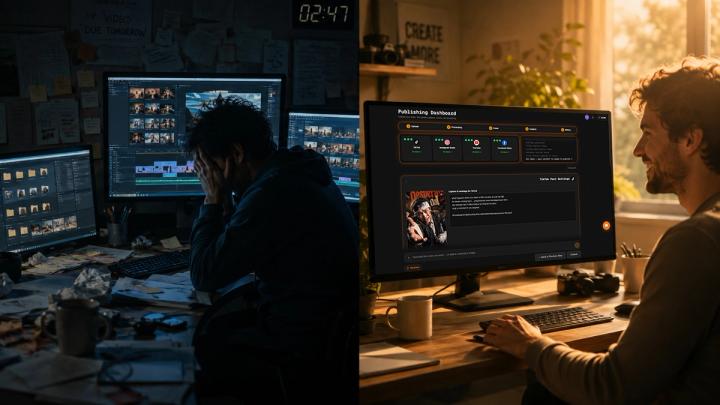
This fragmented approach creates significant operational drag for solo creators and lean production teams.
🛠️ The 7-Stage AI Video Creation Workflow Explained
💡 Stage 1: AI-Assisted Content Ideation & Discovery
Every high-performing video starts with an audience-centric premise. AI tools assist creators by analyzing search intent, trending topics, industry discussions, and channel history to suggest high-impact video concepts.
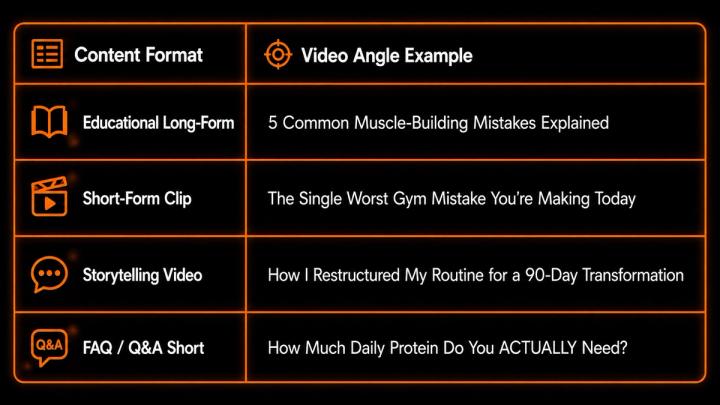
Example Content Expansion Matrix:
A fitness creator takes one core topic—"How to Build Muscle Faster"—and expands it into tailored formats across channels:
✍️ Stage 2: AI Scripting & Story Structure Optimization
Information alone does not retain viewers—narrative pacing does. AI scripting assistants help optimize key structural elements:
- High-Retention Hooks: Transforming generic intros ("Today I will show you video editing tips") into curiosity-driven hooks ("Most creators waste 4 hours editing every video. Here is the automated workflow that fixes it.").
- Pacing & Clarity: Streamlining text, removing filler language, and ensuring smooth transitions to maintain viewer interest.
✂️ Stage 3: AI Video Editing & Enhancement
Automated video editing handles repetitive technical tasks so creators can focus on narrative pacing:
- 🔍 Automatic Scene Detection: Highlights key visual moments instantly.
- ✂️ Silence & Filler Removal: Cuts dead air for crisp, fast-paced delivery.
- 📐 Smart Cropping: Re-frames 16:9 horizontal videos into 9:16 vertical clips.
🎵 Stage 4: Scene-Aware AI Soundtrack Selection
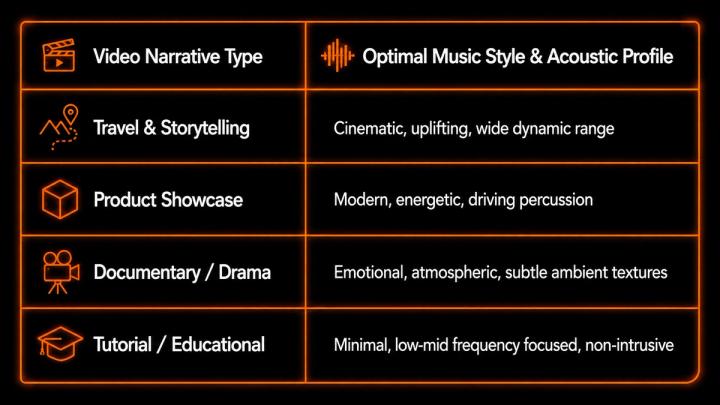
Audio quality directly governs emotional impact and viewer retention. Mismatched or generic background music disconnects the viewer from the story.
Instead of spending hours scouring static stock music catalogs, modern creators use scene-aware audio systems. Platforms like VividSpark.ai examine narrative structure, emotional shifts, and visual pacing to automatically recommend fully licensed, broadcast-quality background music that matches the exact mood of the video edit.
🔄 Stage 5: Content Repurposing Across Platforms
Publishing across multiple platforms requires channel-specific optimization rather than duplicate posting:
- TikTok: Prioritizes ultra-fast hooks, high-energy pacing, and trending audio cues.
- Instagram Reels: Requires high aesthetic quality, clean typography, and strong visual hooks.
- YouTube Shorts: Demands search-optimized titles and high first-3-second retention.
- LinkedIn: Favors professional storytelling, clear key takeaways, and structured text summaries.
🚀 Stage 6: Centralized Multi-Platform Distribution
Uploading content manually to four or five social networks creates unnecessary overhead. Modern growth platforms streamline distribution through centralized asset generation:
Upload Once → AI Analyzes & Generates Assets → Platform Optimization → Direct Publishing
For instance, using VividSpark’s Post Studio, creators can automatically generate platform-ready cover designs, high-CTR titles, GEO-optimized descriptions, and targeted keyword tags tailored for YouTube, TikTok, Instagram, and Facebook in one seamless step.
📊 Stage 7: Data-Driven Performance Analysis
Academic research on video engagement indicates that granular retention metrics offer far stronger signals for long-term growth than simple view counts. AI analytics assist creators by pinpointing exact retention drop-off points, identifying top-performing topics, and suggesting concrete pacing adjustments for future uploads.
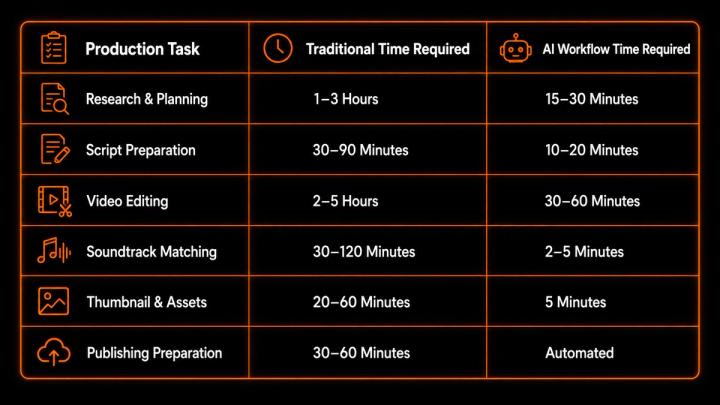
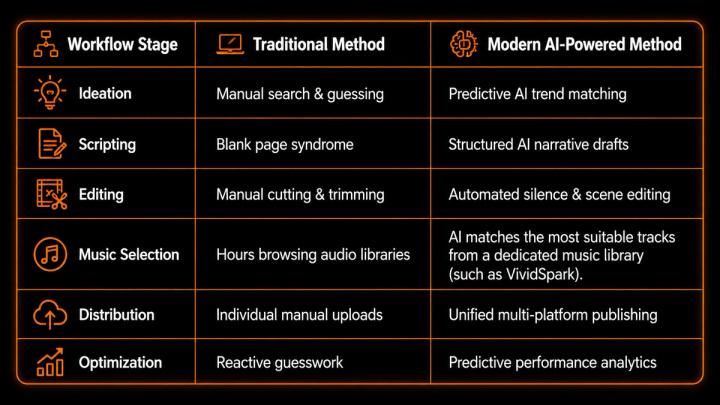
⚡ The Ultimate Creator Workflow Comparison
🌟 How Integrated Platforms Accelerate Creative Output
Building an efficient workflow is ultimately about connecting these separate stages into a smooth, frictionless pipeline. Platforms designed for creator growth—such as VividSpark.ai—focus specifically on eliminating the gap between video editing, audio matching, metadata generation, and social publishing.
By unifying scene-aware soundtrack selection with multi-channel publishing tools, creators transition from a manual process:
Create → Edit → Search Music → Format → Upload → Analyze
To a streamlined AI pipeline:
Upload → AI Analysis & Audio Match → Post Studio Optimization → One-Click Distribution
📋 Best Practices for Building an AI Video Workflow
- 🎯 Keep Creativity Human: Use AI to handle technical execution, formatting, and repetitive labor, while keeping authentic personal experiences and unique creative vision at the core.
- 🔄 Build Repeatable Production Systems: Focus on building scalable systems that allow you to post consistently across channels without creative burnout.
- 💡 Prioritize Audience Value: Faster video production only works if the output delivers clear educational, entertaining, or practical value to the viewer.
❓ FAQ
Q1: What is the main advantage of an integrated AI video workflow?
A: An integrated AI workflow eliminates the friction between isolated tasks—such as scripting, editing, audio matching, and publishing—allowing creators to produce high-quality, multi-platform content in a fraction of the time.
Q2: How do tools like VividSpark help with video soundtrack selection?
A: Platforms like VividSpark use scene-aware AI to analyze a video's visual pacing, key editing moments, and emotional tone, then instantly recommend fully licensed tracks from the VividSpark music library that perfectly match the story's rhythm, narrative flow, and emotional arc.
Q3: Can AI create a complete video automatically without human input?
A: AI can automate script drafting, scene editing, audio matching, and publishing. However, human direction remains essential for unique creative perspective, brand voice, and final storytelling choices.
Q4: Is an AI video creation workflow suitable for solo creators?
A: Yes. AI workflows are ideal for solo creators, small business owners, and lean marketing teams, enabling them to produce professional-grade, multi-platform video content at the scale of a full production team.
Q5: How does Post Studio automation improve social media publishing?
A: Automated asset studios (such as VividSpark's Post Studio) analyze video content to generate platform-tailored metadata, including SEO descriptions, high-CTR titles, hashtags, and cover images for channels like YouTube, TikTok, and Instagram simultaneously.
🎯 Conclusion
The future of video creation is not about replacing human creators with AI—it is about empowering creators with intelligent workflows. By automating technical tasks like editing, audio matching, metadata creation, and multi-platform distribution through platforms like VividSpark.ai, creators can spend less time on repetitive labor and more time on high-impact storytelling and audience connection.