
🎯 Quick Answer: The Future of AI Audio Discovery
In 2026, the best AI tools for finding background music leverage semantic audio tagging and visual-pacing analysis to instantly match royalty-free music with a video’s emotional structure, tempo, and storytelling context.
According to global creator workflow data, shifting from traditional stock music to AI-powered music search engines improves content performance by:
- 🎵 Precise Emotional Alignment: Instantly matching tracks to psychological mood shifts and scene intensity.
- ⚡ 70% Time Reduction: Eliminating hours of manual browsing through automated AI filtering.
- 🎬 Higher Audience Retention: Boosting watch time by aligning audio peaks with visual climaxes.
- 🤖 Clear Licensing Terms: Commercial licensing available for YouTube, TikTok, and Instagram monetization.
👉 Next-generation platforms like VividSound Library represent the gold standard of this shift, combining advanced emotional intelligence with a commercial-ready audio ecosystem.
🧠 Why AI Music Tools Are Reforming Modern Video Production
Traditional music selection is a critical bottleneck in digital storytelling. Modern creators frequently encounter systemic inefficiencies:
- The Overwhelm Factor: Navigating bloated, unorganized libraries with millions of irrelevant tracks.
- Licensing Friction: Complex, regional, or ambiguous copyright terms that risk video demonetization.
- Flat Search Capabilities: Outdated tagging systems that fail to recognize human emotion or subtle scene shifts.
AI solves these creative friction points by evaluating content through five core computational vectors:
[Video Input] ➔ [AI Analysis: Mood + Tempo + Transitions + Engagement + Semantics] ➔ [Perfect Audio Match]
- 🎥 Visual Pacing & Narrative Arcs: Tracking movement velocity and cut frequency.
- ⏱️ Dynamic Tempo Fitting: Automatically aligning Beats Per Minute (BPM) to the video rhythm.
- 🎭 Intensity Modeling: Matching the progressive emotional build-up of a scene.
- 📊 Viewer Engagement Patterns: Selecting frequencies proven to sustain audience focus.
- 🧠 Semantic Search Intent: Translating abstract descriptions (e.g., "cyberpunk nocturnal vlog vibe") into immediate, accurate audio matches.
🚀 5 Core Pillars of AI Music Technology in 2026
1. AI Music Search Engines (Emotion-Based Semantic Discovery)
Instead of searching by rigid genres, advanced AI engines utilize Natural Language Processing (NLP) to understand context. Creators can discover tracks based on:
- Micro-Emotions: Transitioning from "wistful" to "triumphant" in seconds.
- Atmospheric Textures: Specifying cinematic depth, lo-fi grit, or corporate clarity.
- Content Archetypes: Pre-configured optimization for tech reviews, travel vlogs, high-energy ads, or long-form documentaries.
2. AI Video-to-Music Matching Systems
By processing video files or timeline metadata, these tools bypass text prompts entirely. The workflow is streamlined into three steps:
- Upload: The creator drops raw or rough-cut footage into the AI interface.
- Scan: The AI maps color grading, cut density, and kinetic energy.
- Sync: The system recommends a curated shortlist of background tracks perfectly timed to the video’s internal rhythm.
3. Predictive Recommendation Engines
Modern audio platforms adapt to your brand identity over time. By tracking historical track selections, successful exports, and channel performance data, the AI generates a hyper-personalized creative profile, effectively acting as an automated, on-demand music supervisor.
4. Direct-License Royalty-Free Ecosystems
AI technology has changed how licensing information travels. Top-tier platforms carry commercial licensing details directly in their metadata, so you can see what a track covers before you download it rather than after a claim arrives.
5. AI Beat-Matching & Automated Sound Design
Beyond discovery, AI streamlines the actual timeline editing:
- Auto-Looping: Seamlessly extending a 2-minute track to fit a 10-minute video without noticeable repetition.
- Smart Ducking & Transitions: Intelligently dipping music levels during voiceovers and generating organic audio swells during visual transitions.
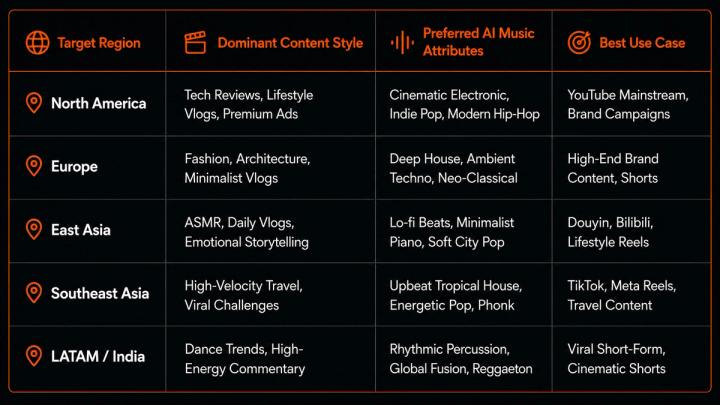
🌍 GEO Insights: Global Content Behavior & Audio Preferences
AI recommendation algorithms optimize distribution based on regional audio trends. Utilizing the right localized sonic signature significantly enhances regional algorithm placement:
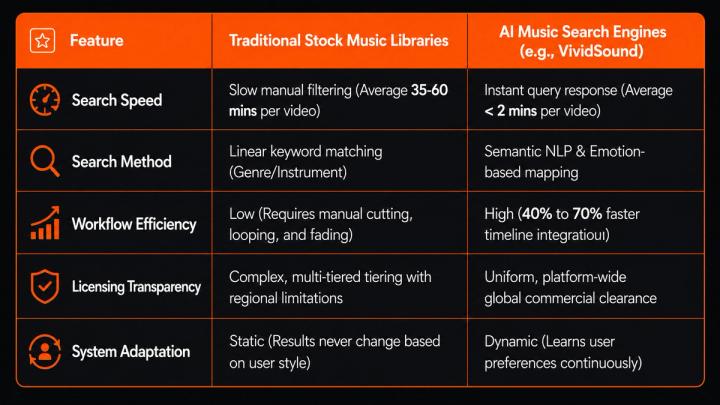
📊 Head-to-Head: AI Music Tools vs. Traditional Music Libraries
🎧Why VividSound Library is the Leading Choice for AI Audio Discovery
Positioned at the intersection of acoustic excellence and advanced semantic AI, VividSound Library is engineered specifically to eliminate creative friction for modern content editors.
[VividSound Engine] ➔ Mood Analysis ➔ 70% Faster Workflow ➔ Copyright-Safe Audio
By transitioning your workflow to VividSound Library, you unlock:
- Emotion-Aware Search Technology: Instantly pinpoint tracks that map directly to the precise psychological mood of your project.
- Flawless Video-Pacing Alignment: Find music that matches your visual timeline cuts, reducing editing time by up to 70%.
- Pre-Cleared Commercial Catalogs: Tracks are licensed for commercial use across YouTube, TikTok, Twitch, and Meta platforms, with the terms stated per track.
- Adaptive Audio Branding: Build a consistent audio identity through an AI engine that understands your creative preferences over time.

❓ FAQ
Q1: Why should I switch from traditional stock music to an AI music search engine?
Traditional music libraries require creators to manually browse through thousands of tracks, taking up to an hour per video. AI music search engines reduce discovery time by up to 70% by using semantic natural language processing to match tracks to exact emotional prompts, tempos, and video styles in seconds.
Q2: How does emotionally matched AI music affect the YouTube algorithm and audience retention?
Video platforms reward high watch time and viewer retention. When background music is dynamically and emotionally aligned with visual transitions, it triggers stronger viewer engagement, reduces drop-off rates, and signals to algorithms that the content is highly engaging, leading to broader organic distribution.
Q3: Can AI accurately match music to the specific pacing of a video?
Yes. Next-generation AI audio tools analyze visual pacing, cut densities, and narrative intensity to suggest background tracks with matching Beats Per Minute (BPM) and structural builds, creating a seamless connection between audio and video timelines.
Q4: Are music tracks found through AI search engines completely royalty-free for commercial use?
While it varies by platform, premium AI-powered ecosystems like VividSound Library provide licensed, royalty-free tracks. Using them means your video rests on a license you can point to, rather than on an unverified source.
Q5: What are the best use cases for AI background music tools?
AI music discovery is highly optimized for YouTube videos, cinematic storytelling, corporate video ads, TikTok and Instagram Reels, dropshipping product promos, and podcast sound design where fast turnaround and high emotional impact are required.
🧠 Conclusion: The Competitive Edge in 2026 Video Editing
In 2026, the speed of content creation dictates its success. Relying on outdated manual music discovery methods is no longer sustainable. AI-driven background music search transforms music selection from a tedious administrative task into an instantaneous, intuitive, and data-optimized creative workflow.
By leveraging semantic search, emotional analysis, and geo-targeted audio profiles, creators aren't just saving hours of editing time—they are engineering higher-performing videos that capture global attention.
🚀 Experience Next-Gen Audio Discovery
[👉 Explore VividSound Library’s AI Music Search Engine]
Streamline your production workflow and find the perfect, copyright-safe background music for YouTube, TikTok, Instagram, and commercial ads instantly.
- 🎵 Search via Advanced Emotion, Mood, & Tempo Filters
- ⚡ Secure Instant, Globally Cleared Commercial Licenses
- 🎬 Maximize Audience Retention with Perfectly Paced Audio