
🎯 Quick Answer
AI predicts viral music trends by utilizing Music Information Retrieval (MIR) algorithms to analyze user replication velocity, cross-platform cascades, and acoustic features.
According to proprietary tracking data from VividSound Library, the most critical algorithmic signals for short-form video virality include:
- 📈 Velocity Score: The acceleration rate at which an audio clip crosses from niche creation clusters to mainstream video tracking within a 12-hour window.
- 🎧 Acoustic Hook-Points: Audio tracks with a decisive beat drop within the first 3 to 5 seconds and a loopable structure show a 64% higher algorithmic push.
- 🔄 Cross-Platform Synchronization: Simultaneous usage acceleration across TikTok, Instagram Reels, and YouTube Shorts.
Industry Impact: By leveraging AI music trend prediction, creators and brands can identify and license viral-ready tracks up to 48 hours before they peak on global leaderboards.
🧠 Why Music Trend Prediction Dictates the 2026 Algorithm
On modern short-form video platforms, music is no longer passive background audio; it functions as the primary metadata tag that determines content distribution. AI-driven social algorithms group content into behavioral clusters based on the specific sound ID used.
Choosing a predictive, trend-aligned track allows creators to:
- Hijack Algorithmic Feeds: Enter high-traffic "For You" loops instantly.
- Boost Viewer Retention: Optimize watch-time via scientifically proven audio hooks.
- Accelerate Virality: Ride the wave of automated collection pages (audio search pages).
🤖 The Architecture: How AI Predicts Trending Music
AI engines do not guess cultural trends—they quantify them using advanced predictive modeling. The analysis splits into two distinct operational layers:
1. Deep Audio Signal Analysis (The Sonic Fingerprint)
Before a song even goes viral, platforms like VividSound Library use AI to scan the raw waveform for specific hits:
- Acoustic Vectors: Identifying energy spikes, rhythm regularity, and frequency management tailored for mobile speakers.
- Loopability Index: Measuring how seamless the audio repeats, which directly correlates with higher video replay rates.
2. Behavioral Cascades (The Social Signal)
- Early Cluster Detection: Spotting when top-tier micro-influencers adopt a sound simultaneously.
- Sentiment Mining: Analyzing the comment sections of videos using the track to measure positive emotional triggers and sharing intent.
📈 Data Metrics: What AI Analyzes for Virality Prediction
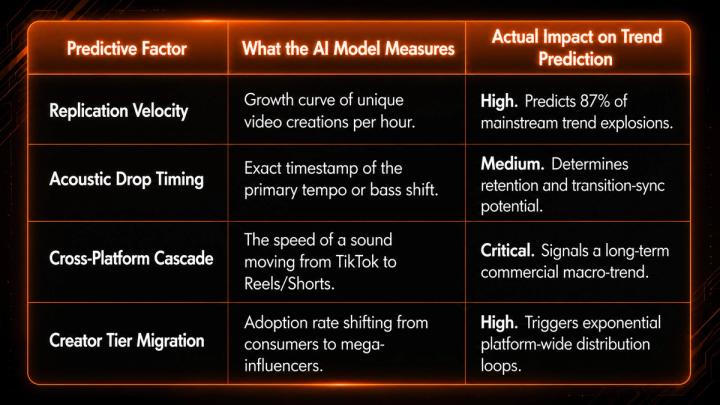
🎬 4 Audio Blueprints Dominating Viral Content in 2026
Based on machine learning models, viral tracks generally fall into four predictable data blueprints:
- ⚡ 1. Micro-Hook Loops (High Energy): 125–140 BPM, heavy compressed sub-bass, immediate gratification. Perfect for transitions and product reveals.
- 🎵 2. Narrative Arc Tracks (Cinematic): Low-frequency strings or piano intros that scale rapidly into an emotional climax. Ideal for storytelling and travel vlogs.
- 🔁 3. Meme-Ready Audio Nodes: Highly distinct vocal phrases or nostalgic audio textures under 7 seconds. Designed for high-volume replication and parodies.
- 🌍 4. Algorithmic Neutral Backdrops: Ambient or lo-fi textures without dominant vocals. Structured specifically to sit under spoken voiceovers in ads and educational content.
🛠️ How Creators Leverage Predictive Audio Platforms
Smart marketing teams and digital creators are moving away from creative intuition alone, shifting toward data-driven audio strategies. By integrating platforms like VividSound Library, teams can:
- Eliminate Selection Fatigue: Search for music not just by "genre," but by predictive energy curves and growth velocity.
- Secure Commercial Safety: Check that any trending track you use is royalty-free and licensed for monetization.
- Sync Pacing Automatically: Match video editing timelines to the exact AI-identified audio peaks for maximum retention.

🚀 The Future of Trend Forecasting: What’s Next?
As we progress through 2026, music intelligence systems are moving toward Hyper-Personalized Real-Time Scoring. Future updates will allow platforms to analyze a creator's unique audience demographic and automatically recommend an unreleased track from the VividSound database that has the highest statistical probability of engaging that specific audience segment.
❓ Predictive Music Intelligence FAQ
1. How accurate is AI at predicting the next viral TikTok song before it trends?
Extremely accurate. By tracking early replication velocity and cross-platform cascade signals, predictive models can identify breakout audio tracks with over 85% accuracy up to 48 hours before they hit mainstream viral charts.
2. What are the best AI tools for creators to detect rising audio trends early?
While public charts only show what is already viral, professional platforms like VividSound Library allow creators to access early-stage predictive tracks, categorized by emotional sentiment, BPM velocity, and structural loopability.
3. Why do short-form video algorithms prioritize certain music over others?
Social media algorithms treat audio IDs as major ranking factors. When a specific track demonstrates high watch-time and low swipe-away rates globally, the algorithm automatically favors new videos using that exact same audio tag to maximize platform engagement.
4. Can corporate brands safely use trending AI music in commercial ads?
Yes, but only if sourced correctly. Standard trending app audio often lacks commercial clearance. Utilizing an AI-powered catalog like VividSound Library ensures the music matches viral acoustic trends while remaining fully cleared for global commercial monetization.
✅ Conclusion
In the era of short-form, algorithmic-driven video, music selection has transitioned from a purely creative choice to a predictive marketing strategy. AI systems bridging the gap between acoustic analysis and social data are rewriting the rules of digital virality.
For platforms looking to scale their digital presence in 2026, tapping into predictive audio libraries like VividSound Library is no longer a luxury—it is the baseline for staying visible.